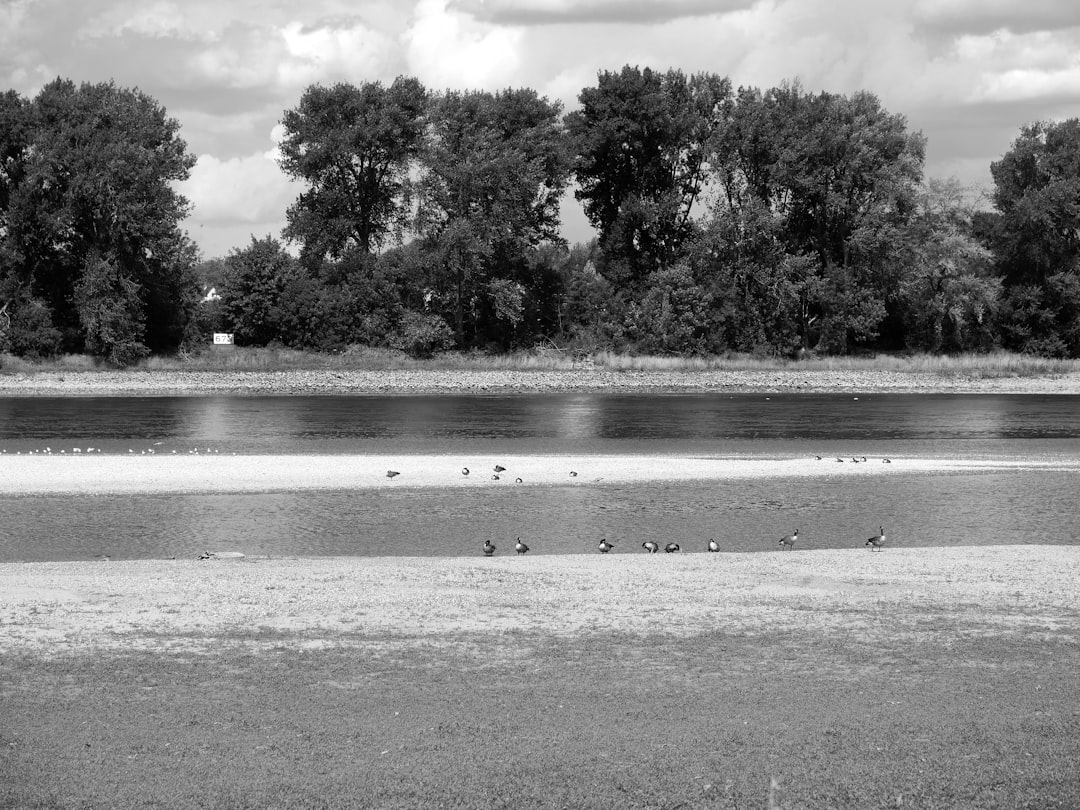
This month, the global water crisis has intensified with historic droughts affecting major rivers such as the Colorado in the United States and the Danube in Europe, leading to drastic water restrictions and heavy economic consequences. Extreme heat in Europe could cost up to 800 billion euros, while water cuts affect hundreds of thousands of people from Puerto Rico to Hungary. This rapid climate degradation highlights the failures of global environmental governance, as nations are set to miss 22 of the 23 nature protection targets set for 2030.
In parallel, regulatory pressure on pollution is increasing. Sweden has announced its intention to ban PFAS, getting ahead of possible European legislation, while in India, the Supreme Court has made a firm decision against industrial river pollution. Finally, new environmental challenges are emerging, linked to the management of millions of tons of solar panel waste expected by 2060 and pollution generated by the rise of data centers for artificial intelligence.
Droughts and heat waves: water security under tension globally
The period was marked by a spectacular and simultaneous worsening of water crises in several major regions of the world, direct consequences of heat waves and prolonged droughts.
In North America, the situation of the Colorado River has reached a critical point. Facing the failure of the seven riparian states to reach a water-sharing agreement, U.S. federal authorities announced in late July historic supply reductions (reviewjournal.com via archive.ph, 31/07). Lake Mead, the country's largest reservoir and vital source for more than 25 million people, continues to decline (NYT (Bluesky), 10/08). The crisis is not limited to the continent: in Puerto Rico, a severe drought has forced authorities to impose 48-hour rotating water cuts for more than 180,000 users, exacerbating the failures of already fragile infrastructure (Bloomberg Markets, 09/08).
Europe faces an equally alarming situation. The Danube, the continent's second-longest river, has reached historically low levels, paralyzing navigation and threatening energy production in Central and Eastern Europe (The Globe and Mail via archive.md, 30/07). In Hungary, the river level fell to just 9 cm in Budapest on August 2, forcing the army to distribute water and threatening the cooling of a nuclear power plant (euobserver.com, 06/08). These extreme temperatures have an exorbitant economic cost for the continent, estimated at 800 billion euros, with France, Italy, and Germany the most exposed (euobserver.com, 06/08). The impact extends to tourism infrastructure, with mountain refuges in Germany forced to close their facilities due to lack of water (Süddeutsche Zeitung, 05/08).
In Africa, water challenges persist. In South Africa, the Nelson Mandela Bay metropolis faces a "human rights crisis" due to the failure of its wastewater treatment systems and pollution of its rivers, according to the South African Human Rights Commission (Daily Maverick, 04/08). In the Western Cape province, authorities are struggling to fund and implement adaptation strategies several months after catastrophic floods (Daily Maverick, 27/07).
These phenomena are exacerbated by global climate dynamics. New research shows that "flash droughts" extract an "alarming" amount of moisture from soils, intensifying forest fires (The Conversation, 29/07), such as those whose probability has been multiplied by 20 in Spain due to climate change (Politico EU, 30/07). Furthermore, the expected emergence of the strongest El Niño since 1950 risks exacerbating these extremes, with droughts predicted in Indonesia and Australia and disruptions to the Indian monsoon (Livemint, 05/08).
Environmental governance: between stated ambitions and critical delays
Faced with the acceleration of the ecological crisis, global and regional governance is struggling to keep pace, revealing a growing gap between set objectives and actions taken.
A draft United Nations report draws a severe assessment: the world is set to miss 22 of the 23 nature protection targets set for 2030 by the Kunming-Montreal Global Biodiversity Framework (Carbon Brief, 29/07). Only the target related to minimizing climate impact on biodiversity is on a positive trajectory. Financing is notably far below needs: only 186 billion dollars have been mobilized in four years, against an annual target of 200 billion (dialogue.earth, 27/07). Worse, an analysis reveals that 84% of nations have not met the 2025 deadline to identify harmful subsidies to nature, which could represent up to 1,800 billion dollars per year globally (Carbon Brief, 28/07).
On the pollution front, regulatory initiatives are advancing in scattered order. Sweden has announced its intention to ban PFAS ("forever pollutants") in consumer products by 2028, getting ahead of a possible EU-wide restriction (euobserver.com, 24/07). This strong national signal comes as the market is already adapting, with cosmetics brands having largely abandoned these substances in mascaras, even if residual contaminations persist (NYT (Bluesky), 29/07).
In other regions, the judiciary is showing itself to be more directive. In India, the Supreme Court has banned the discharge of treated wastewater into the Jojari River in Rajasthan, criticizing the local textile industry for not reusing this water and ordering the creation of a "task force" to resolve this systemic pollution (livelaw.in, 04/08). This firmness contrasts with situations of regulatory laxity denounced elsewhere: in the Democratic Republic of Congo, the NGO Human Rights Watch has accused oil company Perenco of pollution endangering local populations (RFI, 27/07), while in Tunisia, President Kaïs Saïed had to personally intervene to denounce endemic industrial pollution in Radès (RFI, 05/08). In the United States, budget cuts to environmental justice programs under the Trump administration have left vulnerable communities unprepared to face water and air pollution problems (NBC News via archive.is, 15/08).
Emerging pollution and circular economy: new regulatory and industrial fronts
The period has highlighted new sources of pollution and structural challenges for the circular economy, which call for innovative policy and industrial responses.
The energy transition itself generates new challenges. A study published in Nature alerts on the massive volume of photovoltaic panel waste, which is expected to reach between 297 and 402 million tons by 2060. Managing this flow will require international cooperation and recycling strategies adapted to each region to ensure equitable circularity (Nature (Bluesky), 17/08). Meanwhile, the rise of artificial intelligence (AI) reveals often-hidden environmental costs: beyond their water and electricity consumption, data centers dedicated to AI generate significant air pollution (NYT (Bluesky), 05/08). AI governance should also integrate the rights of indigenous peoples, particularly in Africa, to protect biodiversity and traditional knowledge (dialogue.earth, 13/08).
Older but underestimated pollutions are also attracting attention. Car tires have been identified as a major source of microplastics and toxic molecules; 40% of the compounds they contain present risks to health and the environment, calling for greater transparency and new labeling (Vert.eco, 02/08). Similarly, millions of kilometers of old underwater internet cables are disintegrating on the ocean floor, releasing lead and posing maritime safety risks, in the absence of binding international legislation for their removal (Vert.eco, 10/08).
Facing these challenges, economic opportunities and innovative solutions are emerging. The British government estimates the global climate adaptation market at 3,500 billion pounds sterling over 10 years, and considers that the United Kingdom is well positioned to capture a significant share thanks to its expertise in engineering and risk analysis (Global Government Forum, 21/07). Research is also exploring new avenues for pollution remediation, such as the use of lettuce combined with nanoparticles to extract cadmium from contaminated soils, a promising phytoremediation technique (The Conversation FR, 30/07).
To watch
- COP17 on Biodiversity (October 2026): The next Conference of the Parties to the Convention on Biological Diversity (CBD) in Yerevan (Armenia) will be a key moment to assess implementation of the Global Biodiversity Framework and attempt to correct the current trajectory, deemed very insufficient (dialogue.earth, 27/07).
- PFAS restriction in the EU: Sweden's unilateral initiative could accelerate discussions at the European level, where a restriction proposal is under review by the European Chemicals Agency (ECHA) (euobserver.com, 24/07). Progress on this issue will be a major indicator of the EU's political will on chemical pollutants.
- Judicial follow-up in India: The aftermath of the Indian Supreme Court's decision regarding Jojari River pollution, particularly the work of the "task force" that was proposed, should be monitored to assess the effectiveness of judicial decisions against chronic industrial pollution (livelaw.in, 04/08).
- MSC Elsa 3 wreck: The final report from CSIR-National Institute of Oceanography (NIO) on the environmental impact of the wreck off the coast of Kerala (India) is awaited. Its conclusions will determine whether a complex operation to remove hazardous materials from the seabed will be necessary (livelaw.in, 11/08).
Photo: Dirk Röhrig / Unsplash
Get the Water & Environment briefing by email
Monthly intelligence on water & environment, curated with AI and reviewed by senior analysts. Available in English, French and Italian.
Subscribe for free