This month, the militarization of space technologies and drones reached a new milestone, placing private actors such as SpaceX at the heart of geopolitical tensions. Ukraine's request to use Starlink for deep strikes inside Russian territory illustrates armed forces' growing dependence on commercial constellations. At the same time, the proliferation of offensive drones—as evidenced by violations of NATO airspace and threats to civilian infrastructure in Europe—is heightening pressure on national defense strategies and on supply-chain security, brought into sharp relief by a cyber vulnerability affecting the British Royal Navy.
Faced with this intensified competition, Europe is accelerating its efforts to close its access-to-space gap. The European Space Agency (ESA) has multiplied contracts with NewSpace actors, notably in Spain and Germany, to develop new launchers and counter the risk of a strategic shortage by 2030. On the economic front, the global space sector continues to post strong profitability, attracting investment despite high R&D costs, while new cooperation arrangements—such as the one between China and Uzbekistan—are redrawing the map of emerging space powers. Finally, the Copernicus programme once again demonstrated its critical value, both in documenting the acceleration of climate change with record global temperatures and in managing international humanitarian crises.
The escalation of offensive uses of space and drones is redefining global security
The period was marked by an intensification in the use of space technologies and drones for military purposes, further blurring the line between the civilian and military spheres. The strongest signal is Ukraine's request to Elon Musk to use the Starlink network to guide strike drones up to 200 km inside Russian territory (Financial Times, 21/08). This move places SpaceX, a private actor, in the position of arbiter in a decision of major strategic significance, illustrating modern armed forces' dependence on commercial satellite infrastructure and the geopolitical dilemmas this creates for their operators.
In parallel, the drone threat materialized on several occasions on the European continent. On 16 August, a drone suspected of being Russian was shot down by a Spanish F-18 fighter in Romanian airspace, as part of a NATO mission (Il Fatto Quotidiano, 16/08). This incident, the fourth of its kind in Romania this year, confirms the growing pressure on the Alliance's eastern flank. In Germany, the discovery of a drone fitted with an explosive device at Leipzig airport was described as a "wake-up call" by experts, revealing critical infrastructure's poor preparedness against this type of threat and prompting the Federal Public Prosecutor to take up the case (FAZ - Aktuell, 05/08; Süddeutsche Zeitung, 06/08).
The sophistication and proliferation of these systems are accelerating. Russia is deploying new versions of Shahed drones, jet-powered and using Western components and Chinese engines, thereby circumventing sanctions regimes (EU Observer, 18/08). Supply-chain security is also a central concern: the British Ministry of Defence admitted that the cameras of its new "Kraken Scout 3" maritime drones were sending communications to an IP address in China, raising espionage fears despite no confirmed data breach (Il Fatto Quotidiano, 12/08). These developments come against a backdrop of direct tensions, with US strikes against two Iranian launchers on Larak Island, linked to tensions in the Strait of Hormuz, on 30 August (The Guardian, 30/08) and an attack claimed by Kyiv against an aerospace plant in Russia (FAZ - Aktuell, 15/08).
Faced with a risk of launcher shortage, Europe is betting on NewSpace
Aware of its strategic vulnerability, Europe is taking concrete measures to guarantee its autonomous access to space. The European Space Agency (ESA) sounded the alarm, warning of a risk of a launcher shortage by 2030 to place into orbit the satellites of its future programmes (Le Figaro, 10/08). This prospect directly threatens the continent's sovereignty and space ambitions.
In response, ESA has launched a proactive support policy for European NewSpace. In late August, the agency took decisive steps by awarding significant contracts to young launcher companies. The Spanish company PLD Space thus secured a €159 million contract for the development of its satellite launchers (Cinco Días, 27/08). At the same time, German start-ups also received major support: Isar Aerospace received €200 million in funding from ESA, and Rocket Factory was also selected for financial support (FAZ - Aktuell, 27/08, 28/08). These investments aim to diversify European launch options and to stimulate a competitive industrial base capable of meeting growing institutional demand.
NewSpace's economic momentum is confirmed, from Central Asia to financial markets
The global space sector continues to demonstrate remarkable economic vitality. Investment in this field generated a 30% return in 2026, a sign of sustained investor interest in the promises of the "space economy," notably lunar activities (Cinco Días, 10/08). This momentum is not, however, without challenges: SpaceX's massive spending on artificial intelligence (AI) is weighing on its stock-market valuation, raising questions about the long-term profitability of highly capital-intensive R&D investment strategies (Cinco Días, 05/08).
Meanwhile, new actors are asserting their ambitions. Uzbekistan reached an important milestone with the successful launch, from a Chinese maritime platform, of the Samarqand-2028 observation satellite. This project, carried out in partnership with the Chinese company STAR.VISION Aerospace, incorporates an AI module developed for the first time by Uzbek specialists. It positions the country as an emerging actor in space-data processing and reinforces China's technological influence in Central Asia (Times of Central Asia, 05/08). This rise of AI in the space domain is also reflected in recruitment strategies, such as that of the Spanish defense giant Indra, which hired a psychologist to lead its AI department, underscoring the convergence of disciplines to develop cutting-edge technologies (El Mundo - Economía, 16/08).
Starlink consolidates its position in the aviation connectivity market
In the satellite telecommunications (satcom) market, Starlink continues its expansion. The German airline Lufthansa has begun equipping its fleet with SpaceX's technology to offer high-speed in-flight internet access. The rollout, already effective on a first aircraft, is expected to be completed across the entire fleet by 2029, illustrating the rapid adoption of this solution by major air carriers (FAZ - Aktuell, 18/08). This major contract confirms Starlink's lead in a high-value-added market segment.
A crash on the Moon raises the question of regulating cislunar activities
The management of the space environment has become an issue that now extends as far as the Moon. A SpaceX Falcon 9 rocket stage crashed unintentionally onto the lunar surface, creating a crater estimated at 27 meters in diameter (Il Fatto Quotidiano, 05/08). This event, though without immediate consequence, highlights a legal vacuum. No international regulation currently governs liability for space debris crashing onto the lunar surface. As lunar infrastructure projects multiply, this impact raises the question of the need to establish common rules for the protection of the lunar environment and the safety of future missions.
Copernicus establishes itself as a critical tool for climate monitoring and crisis response
The European Union's Earth observation programme, Copernicus, once again proved its essential role on a global scale. The programme's data were at the heart of climate news, confirming that June and July 2026 were the hottest months ever recorded in Western Europe, with four distinct heatwaves since May (Al Jazeera English, 10/08; Süddeutsche Zeitung, 10/08). Worldwide, the oceans reached in July their highest surface temperature ever measured, a phenomenon affecting marine ecosystems and the fishing sector, notably in Africa (ANSA — Economie, 10/08; RFI France, 11/08).
Beyond climate monitoring, Copernicus was a key instrument of the EU's diplomacy and crisis management. The service was mobilized to provide maps and assist relief operations following a violent earthquake in Colombia (Commission européenne, 10/08). It was also activated for the mapping of the wildfires that struck Spain, Greece and the Balkans (Commission européenne, 15/08), and the EU stands ready to deploy it to support Indonesia after another earthquake (Commission européenne, 15/08). These interventions illustrate the programme's dual value: a leading scientific tool and a vector of soft power for the EU on the international stage.
To watch
- SpaceX's decision on Ukraine: Elon Musk's response to Kyiv's request to expand the military use of Starlink will be a major indicator of the standing of private actors in armed conflicts.
- ESA launcher contracts: Monitoring the execution of the contracts awarded to PLD Space, Isar Aerospace and Rocket Factory will be essential to assess Europe's ability to close its access-to-space gap by 2030.
- Debates on lunar regulation: The Falcon 9 stage crash incident could catalyze discussions within international bodies (such as COPUOS) on the need for a regulatory framework for activities and debris on the Moon.
- Rollout of Starlink Aviation: Progress in equipping Lufthansa's fleet and the signing of new contracts with other airlines should be watched to gauge Starlink's dominance in this market.
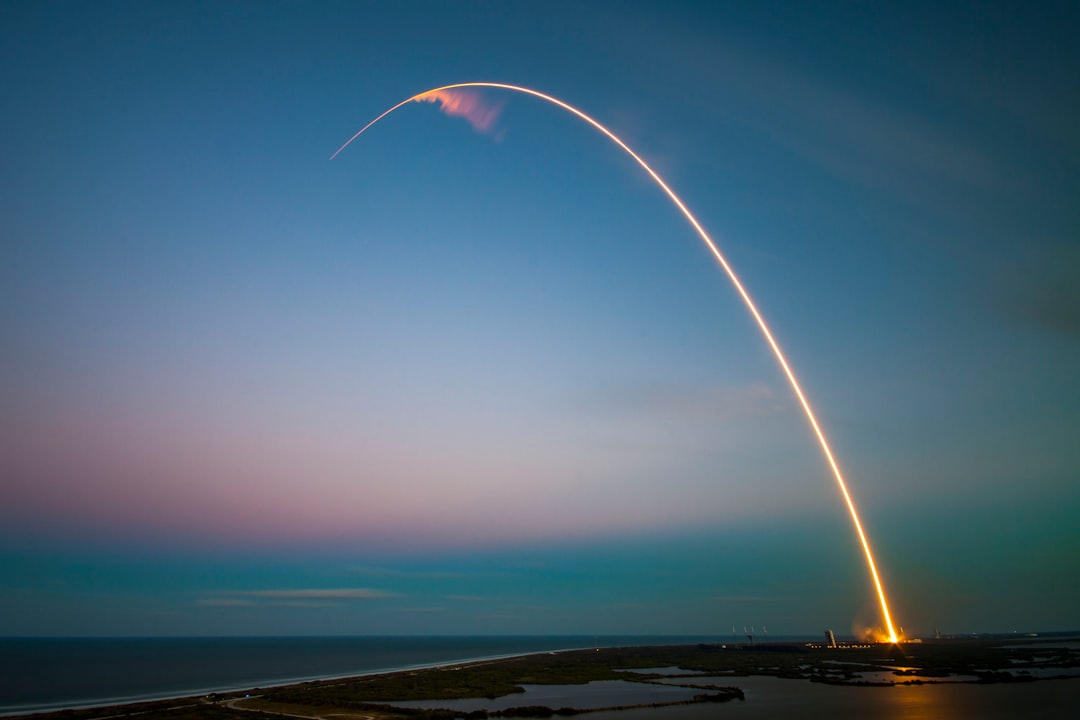
Photo: SpaceX / Unsplash
Get the Space briefing by email
Monthly intelligence on space, curated with AI and reviewed by senior analysts. Available in English, French and Italian.
Subscribe for free