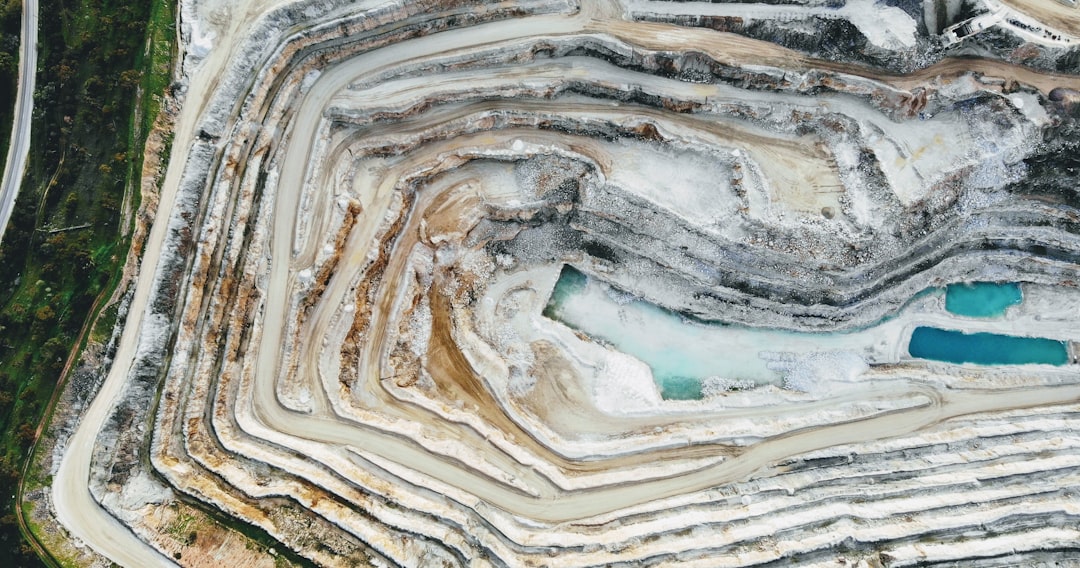
This month, the crisis of illegal mining manifested with particular intensity across the globe, exposing regulatory shortcomings and triggering multiple human tragedies in South Africa, Colombia and Nigeria. This situation highlights the growing tension between subsistence artisanal mining and national legal frameworks, prompting several governments — notably in South Africa and Nigeria — to toughen their legislation and enforcement operations.
In parallel, producer countries continue to assert their strategic ambitions. Zambia re-elected its president on a platform to triple copper output, while the Democratic Republic of Congo (DRC) is seeking to process its resources locally in order to capture greater value. Indonesia, a key nickel player, faces a major paradox: its output, essential to batteries, remains heavily dependent on coal, which increases its carbon footprint. Finally, efforts to reshore value chains in the West are materialising through the granting of new lithium exploration permits in France, despite local opposition that underscores the challenge of securing social acceptance for mining and energy projects.
The Illegal Mining Crisis Lays Bare State Failure
The period was marked by a series of fatal incidents linked to illegal mining, underscoring a major security, social and environmental challenge for many producer countries. In South Africa, illegal chrome mining took a dramatic turn with the death of fourteen people near Marikana on 10 August, following the collapse of a mine (Daily Maverick, 11/08). This event highlights an endemic phenomenon in the area between Rustenburg and Brits, described as the "vacuum of state failure" (Daily Maverick, 02/09). Critics point to a regulatory failure on the part of the government, which tends to criminalise poor artisanal miners without holding large companies to their site-rehabilitation obligations, thereby creating opportunities for illegal mining (Daily Maverick, 19/08). In response, a bill, the General Mining Laws Amendment Bill, is currently before the South African Parliament to toughen penalties, although doubts persist over its ability to target the leaders of criminal syndicates rather than the miners themselves (Mail & Guardian, 17/08).
This scourge is not confined to South Africa. In Colombia, a landslide at an illegal gold mine killed 13 people and injured 7 others in the department of Nariño (Al Jazeera English, 20/08). In Nigeria, seven miners died in the collapse of a pit in Plateau State (Premium Times Nigeria, 13/08). In the face of this situation, the Nigerian authorities are stepping up their efforts: Ebonyi State has set up a special task force to monitor mining activities (Premium Times Nigeria, 15/08) and Niger State proceeded with the arrest of four Chinese nationals for illegal mining, as part of an intensified crackdown (Premium Times Nigeria, 03/09). These actions show a growing awareness among states, but the persistence of the phenomenon in Brazil, notably in indigenous territories (dialogue.earth, 13/08), and in Peru, where a military operation took place in the Amazon (Bloomberg — Economics, 28/08), testifies to the scale and complexity of the problem worldwide.
Sovereignty Strategies: Producer Countries Between Ambition and Paradox
Several resource-rich nations have advanced their positions in order to add more value to their wealth and stake out a place in the global competition. In Zambia, President Hakainde Hichilema was re-elected for a second term with 60% of the vote, on a platform aimed notably at tripling copper output to boost the economy (Al Jazeera English, 18/08). This election confirms a strong political will, which is generating renewed interest in mining careers among young people, but also reviving fears of the "resource curse", tied to still-uncertain environmental management and equitable redistribution of revenues (Daily Maverick, 03/09).
In the DRC, the government is pursuing its strategy of turning the country into a central player in the global energy transition thanks to its cobalt and copper reserves. The emphasis is on domestic processing and local value addition to ensure sustainable growth, despite persistent security challenges (Mail & Guardian, 17/08). In Guinea, the government hopes that a $425 million loan programme from the International Monetary Fund (IMF) will help maximise revenues from the Simandou iron ore mega-project and the mining sector more broadly (Bloomberg — Economics, 12/08).
These development strategies, however, run up against contradictions. The case of Indonesia is emblematic: its ambition to dominate the electric-vehicle battery value chain is undermined by its heavy dependence on coal. The nickel sector, the pillar of this strategy, is the largest user of captive power, which gives Indonesian nickel a very high carbon footprint and poses a paradox for global decarbonisation (dialogue.earth, 13/08). Likewise, the billions of dollars of Chinese investment in Indonesian petrochemicals — at a time when China is tightening its own environmental standards — raise questions about the risk of "offshoring pollution" (dialogue.earth, 26/08).
The ESG Imperative: Social and Environmental Pressure Intensifies
The tension between resource extraction and its social and environmental impacts is increasingly at the heart of debates. In the United States, a coalition of environmentalists and local communities has filed a lawsuit against the federal government to block the first sale of deep-sea mining leases. They argue that the decision failed to adequately assess the potential harm to endangered species, creating a potential legal precedent for this type of extraction (NYT (Bluesky), 20/08).
This issue of the "social licence to operate" is also central in South Africa, where trust between mining companies and communities has become the "ultimate currency" for project viability (Daily Maverick, 17/08). Institutional delays and the lack of accountability of Parliament are pushing citizens affected by mining to organise in defence of their rights (Daily Maverick, 12/08). In France, this issue is manifest in strong local opposition: the mayor of Dambron, Philippe Lesage, threatened to resign in protest against a lithium-battery energy-storage project by the German firm Enertrag, illustrating the difficulty of securing local acceptance for energy-transition infrastructure (Reporterre, 14/08). The question of acceptability is compounded by that of operational safety, as recalled by the collapse of a tailings dam at Samancor Dikwena in South Africa, which caused power outages and fears of contamination (Daily Maverick, 16/08).
Exploration and Supply Chains: Contrasting Signals
Efforts to diversify and secure supplies of critical materials continue, notably in Europe. By decree of 31 July, the French government officially granted an exclusive lithium exploration permit to the company 2gré in the "Bassin de Limagne" (JORF — Journal officiel République française, 27/08). Furthermore, an application for a gold-exploration authorisation was filed on 19 August by SAS TABIKI MINING in Guyane, for the "ARM Bois Blanc" site (Journal Officiel (LegifrSS), 06/09), confirming interest in France's mining potential.
Elsewhere in the world, supply chains have experienced disruptions. In Chile, the world's largest copper producer, shipments in August fell to their lowest level in more than a year (Bloomberg — Economics, 07/09). This decline is attributed to violent winter storms that interrupted some mining operations, contributing to a contraction in the country's economic activity in July (Bloomberg — Economics, 01/09). Finally, the United States stepped up pressure on Cuba by imposing new sanctions specifically targeting the mining and construction sectors, worsening the economic fragility of the island (Al Jazeera English, 20/08).
What to Watch
- Mining bill in South Africa: The parliamentary progress of the
General Mining Laws Amendment Bill, which aims to toughen penalties against illegal mining, will bear close watching to gauge its scope and its real impact on criminal networks. - Mining permits in France: The gold-exploration authorisation application in Guyane ("ARM Bois Blanc" site) is subject to a one-month competitive tendering period from 19 August 2026. The emergence of any competing applicants is worth monitoring. The prefecture's final decision on the battery-storage project in Dambron will also be a key indicator of the trade-off between national energy objectives and local opposition.
- IMF programme in Guinea: Final approval of the IMF's $425 million loan programme, intended to bolster revenues from the Simandou project, will be a decisive step for the Guinean economy.
Photo: Dion Beetson / Unsplash
Get the Mining & Critical Materials briefing by email
Monthly intelligence on mining & critical materials, curated with AI and reviewed by senior analysts. Available in English, French and Italian.
Subscribe for free