This month, African states are asserting with renewed force their desire to capture a greater share of the value of their mineral resources, marking a notable shift in commodity geopolitics. From Zimbabwe, which inaugurates its first lithium processing plant, to Ghana, which is hardening its negotiations on mining leases, the trend toward local value creation is accelerating. This dynamic is, however, facing growing social and environmental contestation, as evidenced by mobilizations against lithium projects in South Africa and Portugal, highlighting the difficulty of obtaining the social license to operate, including for projects deemed strategic.
In parallel, the governance and security of supply chains are being tested. The revelation of the presence of uranium in cobalt exports from the Democratic Republic of Congo constitutes a major alert for all actors in the battery industry. Finally, illegal mining remains a structural challenge in several countries, threatening security, state revenues and the integrity of infrastructure. On the technological front, the emergence of mass production of sodium-ion batteries constitutes a signal to be closely monitored, potentially reconfiguring demand for certain critical minerals in the long term.
African states intensify their strategy of local resource value creation
The period was marked by a series of strong initiatives by several African countries aimed at increasing control and benefits derived from their mineral resources.
Zimbabwe has taken a decisive step by inaugurating its first lithium processing plant. This commissioning, reported on 27 July, positions the country as Africa's leading lithium producer and materializes its strategy to stop exporting raw ore in favor of processing on its soil (RFI — Africa, 27/07). This approach is being imitated in Nigeria, where the governor of Zamfara State inaugurated on 12 July a lithium extraction plant valued at 200 million dollars, the result of a public-private partnership (Premium Times Nigeria, 12/07).
In parallel, negotiations for the renewal of the lease of the Tarkwa gold mine in Ghana, operated by Gold Fields, have become a textbook case of the continent's new mining doctrine. The discussions are seen as a test of African governments' ability to renegotiate contract terms to capture greater local value (Premium Times Nigeria, 14/07). This firmness is reflected in Guinea, which signed on 3 August the convention with the Nimba Mining Company, a public company created to take over a bauxite concession withdrawn from a subsidiary of Emirates Global Aluminium, with the objective of building a refinery on site (RFI — Africa, 08/08). In Mali, recent mining sector reforms could generate up to 883 million dollars to finance critical infrastructure projects (energy, water, transport) (Africa News, 04/08).
This underlying trend is supported by a favorable market context. According to a report by the International Energy Agency (IEA), prices of critical minerals increased sharply in 2025 and in the first half of 2026, with a rise of +130% for cobalt and a doubling of lithium prices (RFI — Africa, 16/07).
Social and environmental contestation, a growing obstacle for mining projects
While the political will to develop mining sectors is being affirmed, opposition from local communities and environmental concerns represent an increasingly significant brake on project implementation on a global scale.
In Portugal, a thousand demonstrators mobilized in early August against the open-pit lithium mine project at Mina do Barroso, led by Savannah Resources. Although this project is considered strategic by the European Union, it faces strong local opposition due to its impact on an agricultural landscape recognized by the United Nations. Opponents denounce a threat to their livelihoods, despite promises of job creation (euobserver.com, 06/08).
This situation finds a direct echo in South Africa, where the expansion of the Highbury lithium mine (SA Lithium) in KwaZulu-Natal is strongly contested. Residents and civil society denounce environmental degradation, pollution, water scarcity and a lack of transparency, expressing the feeling that operators "do not see them as human beings" (Mail & Guardian, 04/08). In Peru, the mediation mechanism launched by the Chinese Chamber of Commerce (CCCMC) to manage complaints against Chinese mining companies failed its first test. Communities displaced by the Toromocho copper mine, operated by Chinalco, are struggling to obtain redress, illustrating the difficulties local actors face in asserting their rights against major industrial projects (dialogue.earth, 30/07).
In Zambia, just days before the presidential election on 14 August, the promise of incumbent President Hakainde Hichilema to triple copper production is running into discontent among populations in the Copperbelt. These populations suffer from massive pollution without seeing tangible economic benefits, in a country declared bankrupt in 2021 (RFI — Africa, 11/08).
Supply chain alert: uranium in cobalt from the DRC
A major alert shook the battery industry this month. A scientific study published on 30 July in Nature Communications, corroborated by an international journalistic investigation (Lighthouse Reports, Le Monde, Financial Times), revealed the presence of uranium in cobalt exports from the Democratic Republic of Congo (DRC). In response to these revelations, the DRC government announced on 8 August the launch of a verification campaign across the entire supply chain (RFI — Africa, 08/08). This discovery poses critical compliance, security and reputational risks for all links in the cobalt value chain, from mining companies to battery manufacturers and automakers.
Illegal mining, a persistent security and economic challenge
Illegal mining continues to represent a major challenge for governance and security in several African countries. In Nigeria, federal and state authorities are multiplying actions to curtail this phenomenon. Arrests and the closure of a site took place in Osun State on 13 July (Premium Times Nigeria), while Yobe and Adamawa States have strengthened their security to slow these activities, suspected of financing banditry and insurrection (Premium Times Nigeria, 14/07). Despite these efforts, Taraba State continues to lose billions of naira each year to this scourge (Premium Times Nigeria, 22/07).
In Ghana, the courts demonstrated their firmness by sentencing Bernard Antwi Boasiako, an opposition political figure, to 20 years in prison with hard labor for illegal mining (Africa News, 20/07). In South Africa, the problem takes on a critical dimension in Johannesburg, where illegal miners ("Zama Zamas") are attacking the underground foundations of the city to extract gold, threatening to cause infrastructure collapse (Daily Maverick, 21/07).
Project delays and global regulatory signals
On the project front, the final investment decision for the Kabanga nickel project in Tanzania, one of the largest critical mineral developments in Africa, has been postponed to the first quarter of 2027. This delay is explained by the prolongation of negotiations between the Tanzanian government and operator Lifezone Metals (Mail & Guardian, 01/08).
On the regulatory front, the European Union announced new sanctions on 13 July, prohibiting the trade of gold from Sudan as well as the export of chemicals necessary for its extraction, in order to cut off sources of conflict financing (EU Council, 13/07). More structurally, the European Commission indicated its intention to propose an "Industrial Decarbonisation Accelerator Act" to accelerate the granting of permits for industrial projects. This initiative will be inspired by experience gained with texts such as the CRMA and the renewable energy directive (EUR-Lex, 23/07).
Technological innovations: sodium-ion battery emerges as an alternative
The battery technology sector experienced a notable advance with the entry into mass production of sodium-ion batteries. Presented as a potentially cheaper and safer alternative to lithium-ion batteries, they could eventually find their place in many applications, including electric vehicles (Nature (Bluesky), 15/07). This technological development could reshape demand for lithium.
Furthermore, research continues to progress on optimizing existing materials, as evidenced by a study on lithium intercalation processes in graphite (Nature (Bluesky), 30/07). Finally, innovations in the circular economy are emerging, such as a solar project on rehabilitated mining waste in South Africa (Mail & Guardian, 30/07) or a new method to valorize PVC waste as lubricants (Nature (Bluesky), 10/08).
To watch
- Presidential election in Zambia (14/08) : The outcome of the election will have a direct impact on the country's mining strategy, particularly on the objective to triple copper production and the management of relations with investors and local communities.
- Cobalt supply chain verification in the DRC : The conclusions of the verification campaign announced by Kinshasa following the discovery of uranium will be crucial for the credibility and security of the entire battery supply chain.
- "Industrial Decarbonisation Accelerator Act" project (EU) : The publication of the European Commission's proposal, expected soon, will clarify measures to accelerate permits and their implications for industrial and mining projects in Europe.
- Investment decision for Kabanga Nickel (Tanzania) : Although postponed to 2027, any new communication on progress in negotiations between the government and Lifezone Metals will be an important indicator for mining investments in Africa.
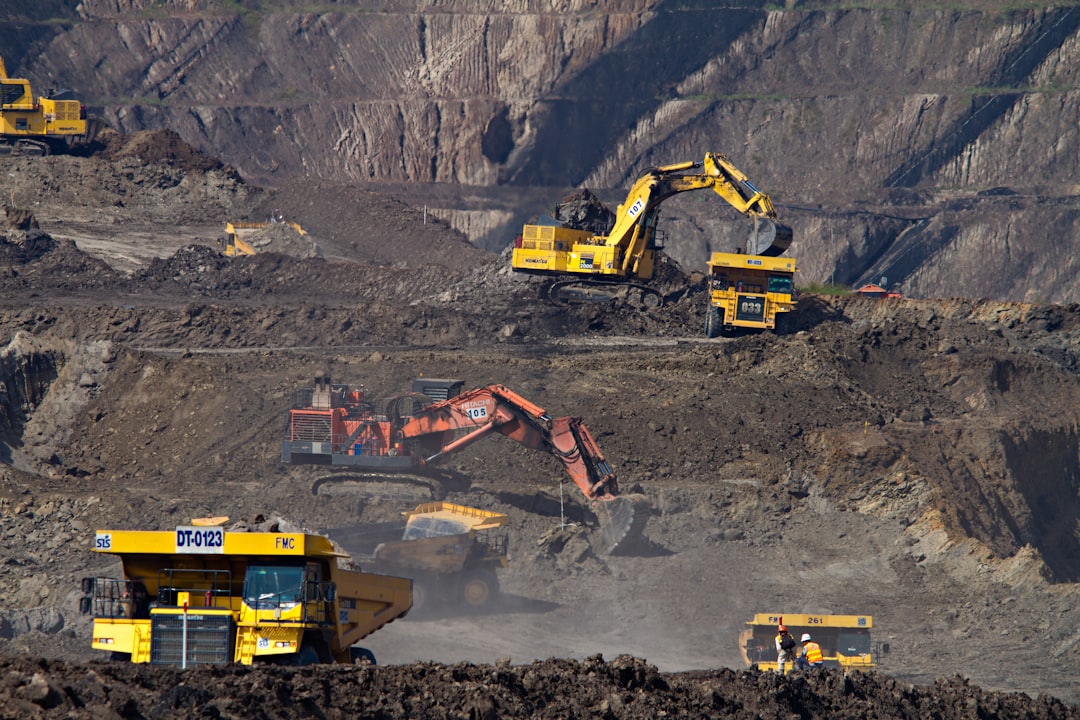
Photo: Dominik Vanyi / Unsplash
Get the Mining & Critical Materials briefing by email
Monthly intelligence on mining & critical materials, curated with AI and reviewed by senior analysts. Available in English, French and Italian.
Subscribe for free