This month, the government of Giorgia Meloni faced a serious outbreak of violence in Val di Susa, where clashes with No Tav activists resulted in more than one hundred injuries among law enforcement. This event dominated the political agenda, leading to a visit by the Prime Minister to the scene and reigniting tensions over major infrastructure projects. The political climate has also become strained, prompting President Sergio Mattarella to intervene publicly on several occasions to call for calm and remind the government of its European obligations, particularly regarding the independence of public media.
The right-wing coalition is showing signs of friction, illustrated by contradictory communications on the use of European defense funds and the continued rise of far-right party leader Roberto Vannacci's party, which is eroding the electoral base of the majority. Meanwhile, several judicial and institutional matters, including prison management and the controversial Messina Strait Bridge project, continue to weaken the executive, which can only claim progress in line with the timetable for implementing the recovery plan (PNRR).
Violent clashes in Val di Susa: the Meloni government faces a resurgence of the No Tav movement
The period was marked by an outbreak of violence unprecedented since 2011 in Val di Susa, the epicenter of opposition to the Lyon-Turin high-speed rail project. On July 25, clashes of rare intensity between protesters and law enforcement resulted in 126 injuries among police officers, carabinieri and finance police officers (AGI, 26/07). Several vehicles were set on fire and actions described as "guerrilla" by the Prime Minister were carried out near construction sites.
Faced with the seriousness of the situation, Prime Minister Giorgia Meloni visited the scene to show her support for law enforcement and denounce "organized violence" and an "attack on the State" (ANSA, 27/07 ; Il Messaggero). The President of the Republic, Sergio Mattarella, also expressed his solidarity with the injured officers to Interior Minister Matteo Piantedosi (AGI, 26/07). The government's response was reflected in a visit by Giorgia Meloni to Val di Susa, where she called on the judiciary to take the strongest measures and announced a new norm to tighten the repression of violence (Il Messaggero).
This crisis immediately had political repercussions. The opposition, through the voice of Elly Schlein (Democratic Party - PD), accused the government of instrumentalizing the situation, while heated debates took place in the Chamber of Deputies on possible intelligence failures (La Stampa, 28/07). The episode also revealed a divergence within the majority, with Brothers of Italy (FdI) and the League showing support for creating new criminal offenses, while Forza Italia (FI) and the Chamber presidency advocate for the application of existing laws.
Interventions from the Quirinal: Mattarella reminds the government of its duties on RAI and the political climate
A sign of growing institutional tension, President Sergio Mattarella intervened on several occasions on sensitive issues. During the traditional "Ventaglio" ceremony with parliamentary press, he warned against "fanatical aversion to the opinions of others" which "contributes to sowing the seeds of violence," describing the latter as a "deadly virus for democracy" (AGI, 30/07). This statement was widely interpreted as a criticism of the current climate of polarization.
More directly, the head of state exerted pressure on the government concerning the governance of RAI, the public broadcasting service. He publicly deplored the paralysis of the RAI Supervisory Commission (Commissione di Vigilanza) and urged Italy to promptly transpose the European Media Freedom Regulation (European Media Freedom Act), which entered into force in August 2025 (Il Fatto Quotidiano, 30/07). The President emphasized that the European Union requires editorial independence and transparent governance for public service media, a message that contrasts sharply with the majority's reform project, accused by the opposition of maintaining political control over RAI (Il Fatto Quotidiano, 30/07).
Tensions and signs of weakness within the coalition
The cohesion of the right-wing majority has been tested on several issues. Government communication on the use of the SAFE European defense fund (Security for Action Europe) has been particularly confused. Foreign Minister Antonio Tajani (FI) first announced the decision to use 14.9 billion euros in loans, before backtracking by clarifying that these funds were only "reserved" and that the final decision would be made by year's end (Il Fatto Quotidiano, 28/07 ; Il Foglio, 28/07). This confusion highlighted the difficult trade-offs between Defense needs, supported by Defense Minister Guido Crosetto (FdI), budgetary constraints of Finance Minister Giancarlo Giorgetti (League) and Matteo Salvini's principled opposition to any additional European debt (Il Foglio, 29/07).
On the political front, polls continue to reflect a troubling dynamic for the coalition. According to the "Supermedia" of July 30, Brothers of Italy falls below the 27% mark for the first time (at 26.7%), while Roberto Vannacci's Future National (FN) party continues its rise to reach 7.1%. This progress is at the expense of the entire coalition, whose overall support drops to 41.6% (AGI, 30/07), confirming the threat that FN represents to the League and FdI. In this context, Senate President Ignazio La Russa (FdI) distanced himself from controversial remarks by General Vannacci on femicide, calling them a "colossal error" and reminding that the right has always had respect for women as a cardinal value (AGI, 29/07).
Judicial and legislative matters undermine the new school year
Several judicial and institutional matters continue to poison the government's agenda. The flagship Messina Strait Bridge project, already targeted by a corruption investigation (context — 06/2026), is now the subject of a legal challenge by the CGIL union before the Court of Auditors (Corte dei conti). The union is calling for an investigation into potential "danno erariale" (harm to public finances), arguing that the project's cost, estimated at more than 13 billion euros, comes at the expense of more urgent infrastructure for the South (Il Fatto Quotidiano, 27/07 ; ANSA, 27/07).
The situation in Italian prisons has also been subject to a major alert. The Palermo prosecutor, Maurizio De Lucia, declared before the parliamentary anti-mafia commission that mafia bosses continue to command from their cells thanks to smartphones obtained upon their incarceration. He also warned that Cosa Nostra was seeking to acquire mine-launching drones (Il Fatto Quotidiano, 28/07). These remarks were supported by the Naples prosecutor, Nicola Gratteri, who strongly criticized Justice Minister Carlo Nordio for denying the situation (Il Fatto Quotidiano, 26/07). In this climate, threats attributed to the Red Brigades were made against Minister Nordio in Rome (ANSA, 30/07).
Finally, Parliament is the scene of tense debates on sensitive reforms. FdI has displayed its determination to advance its reform on wiretapping, even without the agreement of its allies (La Repubblica, 25/07). Meanwhile, a draft decreto legislativo (legislative decree) on artificial intelligence is criticized by the opposition (PD), which sees in it an attempt to authorize facial recognition without prior judicial authorization (Il Fatto Quotidiano, 30/07).
Active diplomacy: Italy positions itself on the Middle East
Despite internal turbulence, the government maintained sustained diplomatic activity, primarily driven by Foreign Minister Antonio Tajani. Italy strongly reaffirmed its position on the Israeli-Palestinian conflict, firmly condemning Israeli settler violence in the West Bank and opposing any settlement expansion that would jeopardize a two-state solution (AGI, 30/07).
Rome hosted a meeting at the end of July of the working groups of the New York Conference, bringing together 25 delegations to revive the peace process. On this occasion, Italy recalled that recognition of the Palestinian State was conditional on the disarmament of Hamas and the strengthening of the Palestinian National Authority (AGI, 30/07). Italy also stated it was ready to participate in a new peace mission in Lebanon to succeed UNIFIL and confirmed the dispatch of a carabinieri officer to lead the European mission in Rafah (AGI, 28/07).
PNRR: implementation continues
On the economic front, the government was able to communicate on a positive note. According to a progress report as of July 1, 2026, Italy has achieved 416 of the 575 objectives provided for under its National Recovery and Resilience Plan (PNRR). This progress made it possible to collect a total of 165.99 billion euros in European funds, demonstrating execution that continues according to the established timetable (ANSA, 30/07).
To watch
- Decision on SAFE funds: The government must decide by year's end on the effective use of the 14.9 billion euros in loans from the European defense fund.
- RAI reform: Pressure from the Quirinal and the missed deadline for transposing the European media freedom regulation could force the majority to revise its plans.
- Messina Bridge: The outcomes of the CGIL's legal challenge before the Court of Auditors could add new legal and financial pressure on the project.
- Justice and security laws: The parliamentary progress of bills on wiretapping and the use of AI by law enforcement will be a test of coalition cohesion.
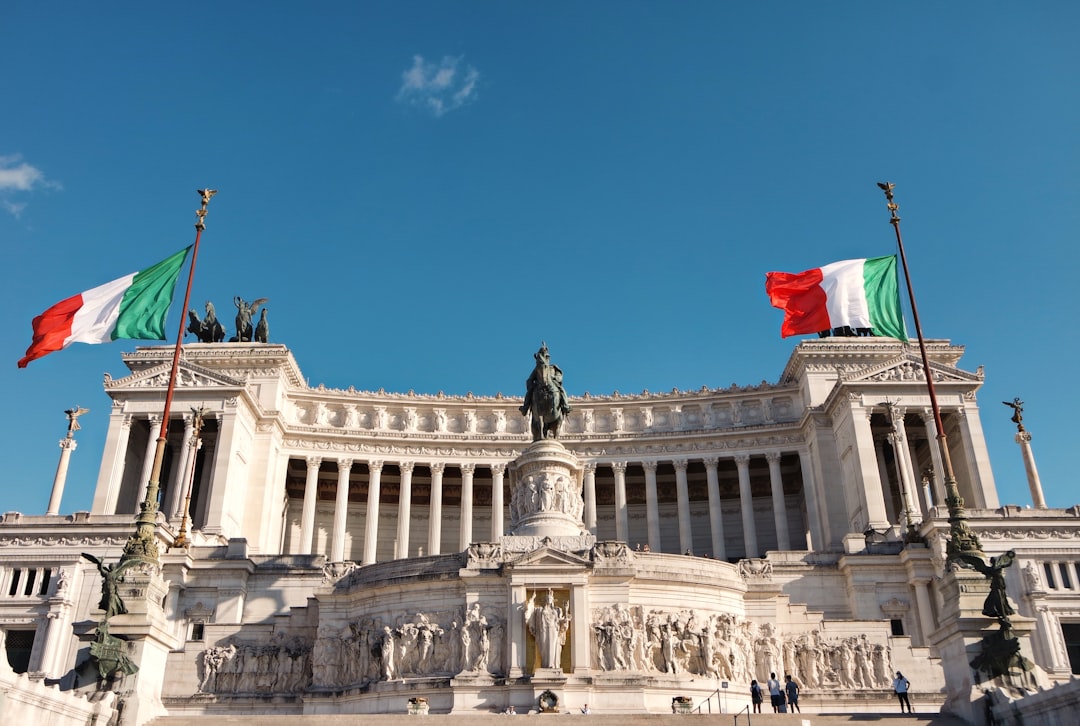
Photo: Michele Bitetto / Unsplash
Get the Italia Politica briefing by email
Monthly intelligence on italia politica, curated with AI and reviewed by senior analysts. Available in English, French and Italian.
Subscribe for free