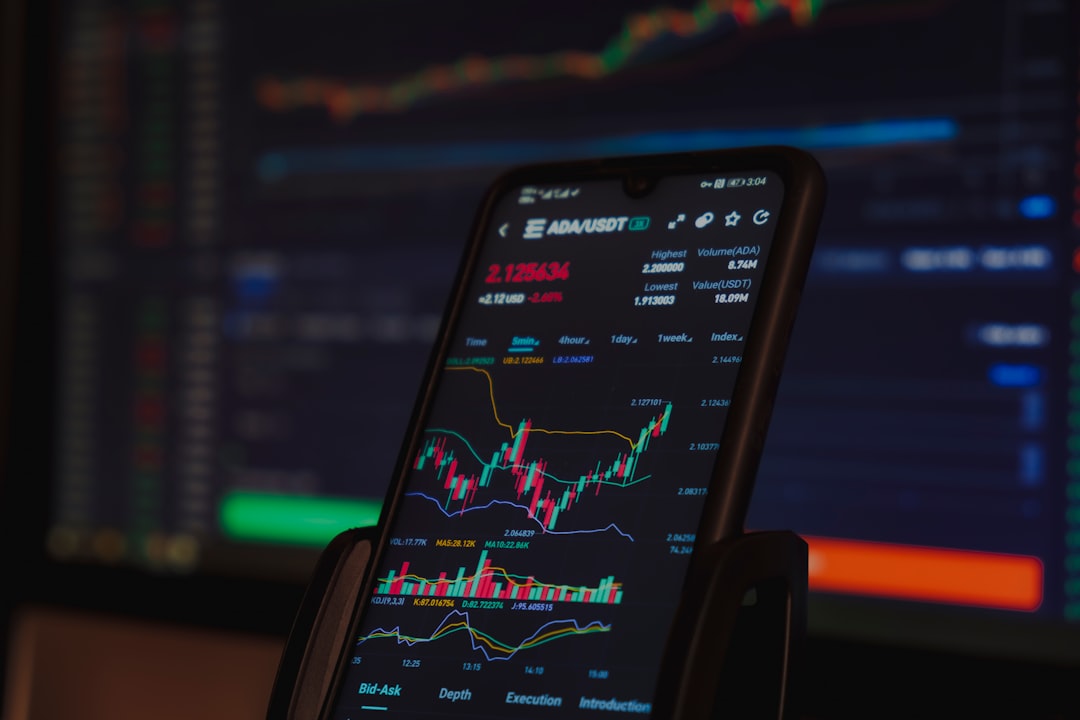
This month, an abrupt military escalation in the Middle East, marked by US strikes on Iran, has tipped global markets into a new era of geopolitical risk, reversing the previous month's brief diplomatic détente. This situation has driven a sharp divergence in sector performance, favouring energy and banks at the expense of airlines and the automotive industry, while insurers are drastically curtailing their coverage in conflict zones. In parallel, capital markets are grappling with an underlying trend: long-term borrowing costs have reached highs not seen in decades, heralding a potential new era of durably higher interest rates.
On the regulatory front, the crypto-asset sector is undergoing a profound transformation. The entry into force of frameworks such as the MiCA regulation in Europe is triggering a severe market consolidation, even as the stock-market valuations of crypto firms collapse and a global "war for talent" is under way for blockchain experts. Finally, the fight against money laundering is intensifying across every continent, with investigations and sanctions targeting leading financial entities and political figures in the United States, Europe, Latin America and Africa, signalling zero tolerance on the part of regulators.
Military Escalation in the Middle East Redraws the Financial-Risk Landscape
The period was marked by a dramatic deterioration in the Middle East security situation, in stark contrast to the diplomatic agreement that had eased tensions in July (contexte — 07/07). US airstrikes targeted the Iranian island of Larak on 31 August (Premium Times Nigeria, 31/08), as part of what is now described as a six-month-long "US-Israeli war against Iran" (Al Jazeera English, 28/08). This escalation is having immediate and profound repercussions for financial markets and the global economy.
The most direct impact is measurable in sector performance. An analysis of the last six months of conflict shows that banks and energy-sector companies have posted significant profits, while airlines and carmakers have been penalised (Al Jazeera English, 31/08). This divergence stems from rising energy prices and heightened volatility that favours banks' trading activities. The insurance sector is also on the front line: insurers have begun to restrict maritime risk coverage in the Red Sea, a decision that significantly complicates the sale of Saudi oil. Indeed, a Chinese supertanker had to leave the area via the Bab-el-Mandeb strait on 23 July, a concrete illustration of these new constraints (El País Américas, 03/08).
At the regional level, the instability is aggravating existing economic fragilities. The World Bank now anticipates that the Lebanese economy, hit hard by the conflict with Israel, will contract by 6.4%, dashing hopes of recovery and fuelling inflation (Al Jazeera English, 22/08). On the financial-policy front, the United States is wielding the weapon of sanctions with renewed intensity. US Treasury Secretary Scott Bessent announced targeted measures, including a proposed rule barring US banks from dealing with the UAE branches of the Egyptian bank Banque Misr. He also warned of imminent weekly sanctions and the targeting of another, as-yet-unnamed bank, illustrating a strategy of sustained financial pressure (justsecurity.org, 31/08).
The Crypto-Asset Sector: Between Regulation, Consolidation and Scandal
The global crypto-asset market is going through a phase of structural transformation, characterised by growing regulation, a violent stock-market correction and strong demand for specialised skills. In Europe, the entry into application of the Markets in Crypto-Assets Regulation (MiCA) since 1 July 2026 has triggered a "severe cull": of some 5,000 sector players, only 300 have obtained authorisation, entirely reshuffling the market deck (alternatives-economiques.fr, date not specified). This dynamic is visible in Italy, where the spread of cryptocurrencies is continuing under the watchful eye of the new regulatory framework (Corriere della Sera, 18/08). In France, the Autorité des Marchés Financiers (AMF) published clarifications on 3 August regarding the rules applicable to financial investment advisers (CIF) offering crypto-assets, a sign of heightened vigilance (Village de la Justice, 03/08).
This phase of regulatory maturation coincides with a period of market turbulence. Cryptocurrency firms that had enjoyed a meteoric rise on Wall Street are now suffering a collapse in their share prices, marking the end of a cycle of speculative fervour (El País Américas, 13/08). Paradoxically, this consolidation is accompanied by a "war for talent": traditional banks, fintechs and consultancies are actively competing for blockchain-expert profiles, signalling that strategic interest in the underlying technology remains intact despite the market crisis (El País Américas, 17/08).
The period also brought persistent risks to light. A "fatal" cyberattack in Liechtenstein caused a massive data theft, jeopardising the entire financial centre and its reputation as a digital vault (FAZ - Aktuell, 14/08). Digital financial crime remains a major challenge, as shown by a study of the ASEAN region highlighting the tension between the cross-border nature of decentralised finance (DeFi) and ill-suited mutual legal assistance mechanisms (OpenAlex — Politiques publiques, 20/08). In the United States, the fact that a businessman under investigation for money laundering, Guren "Bobby" Zhou, was able to invest $100 million in former President Donald Trump's cryptocurrency company illustrates the persistent gaps in controls (NYT (Bluesky), 10/08).
The Fight Against Money Laundering Intensifies Across Every Continent
The strengthening of anti-money-laundering (AML) and counter-terrorist-financing efforts has become a global trend, with notable regulatory and judicial actions in several major regions.
In the Americas, the case of Alex Saab, accused of laundering more than $350 million for Nicolás Maduro's regime in Venezuela, will reach a decisive stage with his trial scheduled in Miami on 8 September (InSight Crime, 07/08). Furthermore, Capital One confirmed that the closure of the Trump Organization's accounts in 2021 was a decision taken by its AML team, underscoring that compliance risks linked to politically exposed persons are taken very seriously by major financial institutions (Al Jazeera English, 02/08).
In Europe, the new Anti-Money Laundering Authority (AMLA) is continuing to establish itself. Its Chair, Bruna Szego, was heard on 15 July by the European Parliament's ECON and LIBE committees, marking a key step in making the agency operational (EP — Affaires éco & monétaires, 10/08). In Italy, the interweaving of finance and politics is the subject of an in-depth judicial examination, with magistrates having asked Parliament for access to communications between ministers and bankers as part of an investigation into the banks Monte dei Paschi di Siena (MPS) and Mediobanca (La Repubblica, 05/08).
In Africa and the Middle East, several cases with strong political overtones have erupted. In Zimbabwe, President Emmerson Mnangagwa's daughter-in-law was arrested on 30 August for drug trafficking and money laundering (RFI — Afrique, 30/08). In Lebanon, fresh legal action has been brought against the former central bank governor, Riad Salameh, who has already been charged with financial crimes (Al Jazeera English, 10/08). These cases attest to mounting pressure for accountability.
Sustainable Finance: The Cost of Climate Change Becomes a Tangible Reality
August confirmed that climate change is no longer an abstract risk but a direct and immediate financial-cost factor for companies and households. The succession of heatwaves, devastating wildfires, droughts and storms on a global scale has generated a tangible "financial cost" (NYT (Bluesky), 11/08). This materialisation of physical risks reinforces the conviction that massive new "unavoidable" investments in adaptation are now necessary (NYT (Bluesky), 11/08).
On the public-policy front, a large-scale global study provided robust evidence of the effectiveness of carbon pricing. According to its conclusions, this mechanism has made it possible to reduce CO2 emissions by 19 to 23% over a ten-year period, mainly through the substitution of energy resources. This gradual effect confirms the role of pricing as an essential long-term signal for steering investment (OpenAlex — Politiques publiques, 24/08).
The African continent is increasingly positioning itself as a key player in shaping the sustainable-finance agenda. Figures such as Dr Nozipho Sibiya-Zulu, Africa policy specialist at Principles for Responsible Investment (PRI), are playing a driving role in steering private capital towards climate action and sustainable development across the continent (Mail & Guardian (Afrique du Sud), 05/08). In parallel, a new generation of professionals, such as Dimakatso Koketso Lekola in South Africa, is specialising in supporting companies on ESG compliance and reporting, attesting to the sector's professionalisation (Mail & Guardian (Afrique du Sud), 05/08).
Capital Markets: Rising Rates and AI Upend Strategies
Two major forces are currently reshaping global capital markets: a new era of high interest rates and a headlong race to invest in artificial intelligence (AI).
Long-term borrowing costs have reached levels not seen in decades across the major economies. This trend is fuelled by a combination of factors: rising oil prices reviving inflation fears, the massive increase in public debt (with US national debt approaching $40 trillion) and strong demand for bond financing from tech giants for their AI investments (FT News Briefing, 19/08).
AI has indeed become a major driver of capital flows. Financial giants such as Apollo Global, BlackRock and Goldman Sachs are partnering with NVIDIA to create a $500 billion fund specifically intended to finance artificial-intelligence infrastructure (FT News Briefing, 11/08). This colossal capitalisation requirement underscores AI's transformative character for the economy. This transformation comes with new risks: Andrew Bailey, head of the Financial Stability Board (FSB), identified AI's impact on cyber risk as a major concern for the global financial system (justsecurity.org, 31/08).
At the national level, regulators and governments are navigating this new environment. In India, the Reserve Bank of India (RBI) imposed restrictions on the Desaiganj Nagari Cooperative Bank to protect depositors, illustrating active banking supervision in the face of an institution's difficulties (RBI Inde (banque centrale), date not specified). In Italy, Giorgia Meloni's government is welcoming economic data deemed "encouraging", with growth of 1% over the first two quarters of 2026 and a narrowed spread, even though risks persist in the banking sector (AGI — Politique italienne, 14/08).
Regulatory Developments in Europe
Although global attention is focused on geopolitics and macroeconomics, regulatory work is continuing in Europe. The European Supervisory Authorities (EBA, EIOPA and ESMA) proposed amendments on 5 August aimed at easing bilateral margin requirements for small counterparties whose OTC derivatives activity falls below the EMIR regulation thresholds (EU Law Live, 05/08). This measure seeks to apply the principle of proportionality so as not to penalise smaller players.
Moreover, the Banking Union framework is being tested in the legal arena. Addiko bank has brought an action for annulment against a decision of the European Central Bank (ECB) concerning its group recovery plan. The case, now public, will be watched closely as it could set a precedent regarding the powers and decisions of the single supervisor (EU Law Live, 03/08). Finally, the Digital Operational Resilience Act, DORA, continues to serve as a benchmark for the information-system security requirements of financial entities (EUR-Lex — Numérique, 26/08).
What to Watch
- 8 September 2026: Start of Alex Saab's federal trial in Miami on charges of large-scale money laundering (InSight Crime, 07/08).
- September 2026: Continuation expected of the US Treasury's weekly sanctions against financial institutions as part of its economic-pressure strategy (justsecurity.org, 31/08).
- Coming months: Addiko Bank's action for annulment against the ECB will run its course before the European courts, constituting an important test for the Single Resolution Mechanism (EU Law Live, 03/08).
- February 2027: End of the six-month period of restrictions imposed by the RBI on the Desaiganj Nagari Cooperative Bank in India, when the bank's situation will be reassessed (RBI Inde (banque centrale), date not specified).
Photo: Sajad Nori / Unsplash
Get the Finance briefing by email
Monthly intelligence on finance, curated with AI and reviewed by senior analysts. Available in English, French and Italian.
Subscribe for free