This month, European politics is marked by a dual acceleration on budgetary and defense fronts, driven by the Franco-German axis but facing growing political uncertainties. France has launched a diplomatic offensive for the establishment of new own resources to finance a future EU budget estimated at 2,000 billion euros, seeking to avoid an increase in national contributions. Simultaneously, the awareness of the need for strategic autonomy has materialized through defense initiatives, against the backdrop of a reassessment of American engagement and record public support. The Union's foreign policy remains, however, a point of friction, notably on the Israeli-Palestinian question where significant disagreements persist between Member States, putting the Commission under pressure. Finally, a major political alert is emerging in France with the formalization of Marine Le Pen's candidacy for the presidential election, prompting European capitals to prepare for a possible questioning of European integration at the heart of the project itself.
Budget and Economic Sovereignty: France maneuvering for new own resources
Facing the prospect of the next multiannual financial framework (MFF), France is actively seeking to obtain consensus on new sources of revenue for the European Union. The administration of President Emmanuel Macron has been mandated to identify new taxes at EU level capable of financing the next budget, which could reach 2,000 billion euros (Politico EU). The objective is twofold: to avoid an unpopular increase in national contributions and to deprive far-right parties of an angle of attack on the cost of Europe. This initiative, which aims to generate up to 400 billion euros over seven years, follows the failure of negotiations on a previous own resources package in July 2025. The French Minister for European Affairs, Benjamin Haddad, stressed that these new resources were a precondition for accepting future common expenditures, particularly for defense, technology, and ecology (Politico EU).
This political approach is in line with economic analyses arguing for strengthening European sovereignty. In a notable speech on July 10, the Governor of the Bank of France, Emmanuel Moulin, called for deepening internal integration to bridge the EU's growth lag compared to the United States, which stands at 15 percentage points of GDP per capita since the financial crisis (Jacques Delors Institute). He recommended the rapid establishment of a Savings and Investment Union (SIU) in order to mobilize European savings, which exceed those of the United States, toward the Union's massive investment needs, notably in R&D where the annual gap with the United States is 0.7% of GDP.
Defense and Foreign Policy: Europe facing its responsibilities
The debate on strategic autonomy and European defense has reached a new level, fueled by unstable geopolitical context and an evolution in American posture.
An unprecedented dynamic for European defense
A groundswell is sweeping through public opinion: support for strengthened European defense is reaching record levels, offering a window of opportunity for leaders to undertake structural reforms (ECFR). This awareness comes as the United States reassesses its global priorities, forcing Europe to question the durability of the current security architecture and the role of Article 5 of the North Atlantic Treaty Organization (NATO) (ECFR).
In this context, several initiatives bear witness to a will to act. Paris and Berlin are striving to energize EU foreign policy (Jacques Delors Institute). On the operational level, France, in connection with the United Kingdom and other allies, has declared itself ready to deploy within days a naval mission to secure the Strait of Hormuz, a vital sea route for global energy supply (Politico EU).
Persistent divisions in the Middle East and the effectiveness of sanctions in question
Despite this will to assert itself, the EU remains deeply divided on its policy toward Israel. A growing group of Member States is pressing the European Commission to propose commercial restrictions on products from illegal Israeli settlements. While the economic impact would be limited, the political and legal stakes are considerable, and President Ursula von der Leyen is accused of procrastinating (Politico EU). These tensions crystallized with Israel's decision to cut "all contacts" with High Representative Kaja Kallas following her statements on apartheid (Euractiv.com).
Moreover, the effectiveness of the EU sanctions regime itself is being called into question. A legal analysis highlights a structural flaw: individuals and entities win their cases annulling sanctions before EU courts in Luxembourg, but the Council can reinscribe them on the list on new grounds, emptying judicial protection of its substance (European Interest).
Industrial and Digital Policy: between sovereignty and transatlantic tensions
In the wake of the "Technology Sovereignty Package" presented in early June, the EU continues to define its digital strategy, marked by a will to regulate and friction with the United States. President Emmanuel Macron called on democracies worldwide to collaborate to regulate artificial intelligence (AI), criticizing Washington's "strictly nationalist" turn following the suspension of access to certain American AI models for foreign nationals (European Interest).
However, implementation of the European strategy faces its own challenges. The appointment of a technology sector CEO as the EU's new special envoy for AI raised significant questions of conflicts of interest, casting doubt on the impartiality of the Commission's action (EU Observer). The stakes are high, as world trade is being transformed into a tool of geopolitical coercion, obliging the EU to be "open but not naive" and to diversify its value chains (Jacques Delors Institute).
Institutions and Governance: alerts and internal friction
The integrity of European institutions was again tested this month. An arrest warrant has been issued against former European Commissioner Dimitris Avramopoulos in the context of the Qatargate corruption scandal, reviving concerns about the influence of foreign lobbies (Politico EU).
Within the European Parliament, political tensions have emerged. President Roberta Metsola used her prerogatives to override the opinion of MEPs and force the advancement of negotiations on the controversial law to combat child sexual abuse material online (Politico EU). Furthermore, the rallying of a Renew Europe MEP to a bill on expulsions, welcomed by the far-right, illustrates the fault lines running through central political groups (EU Observer). On a more consensual note, Parliament reached a final agreement with the Council to strengthen the rights of air passengers, guaranteeing in particular compensation for delays of more than three hours and faster reimbursements (European Parliament).
Climate: the urgency of adaptation facing rising costs
The impact of climate change is increasingly being felt on public finances. A new estimate puts the annual bill for climate adaptation in Europe at 70 billion euros, an amount that explodes under the effect of heat waves and forest fires that are becoming increasingly frequent and intense (EU Observer). This pressing economic reality highlights the inadequacy of current EU emergency financing mechanisms and fuels calls, notably from the think tank Bruegel, to modernize them urgently.
France political watch: the Le Pen hypothesis, a structural issue for the EU
A domestic political development with potentially seismic implications for the Union has caught the attention of foreign ministries. Despite a conviction for misappropriation of European funds confirmed on appeal on July 7, Marine Le Pen has formalized her fourth candidacy for the French presidential election. Her appeal in cassation having a suspensory effect, she remains eligible. Analysts such as those from ECFR emphasize that European decision-makers must now prepare themselves for a possible "abrasive and conflictual" presidency in Paris, which would seek to question the foundations of European integration (ECFR).
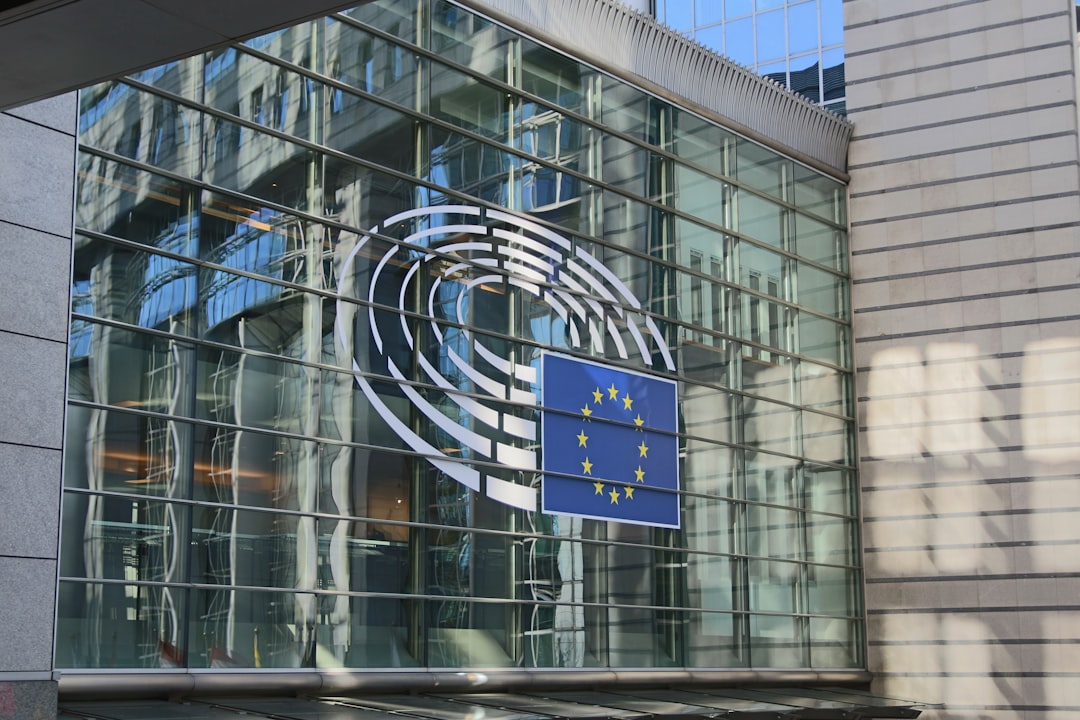
Photo: Guillaume Périgois / Unsplash
Get the European Policy briefing by email
Monthly intelligence on european policy, curated with AI and reviewed by senior analysts. Available in English, French and Italian.
Subscribe for free