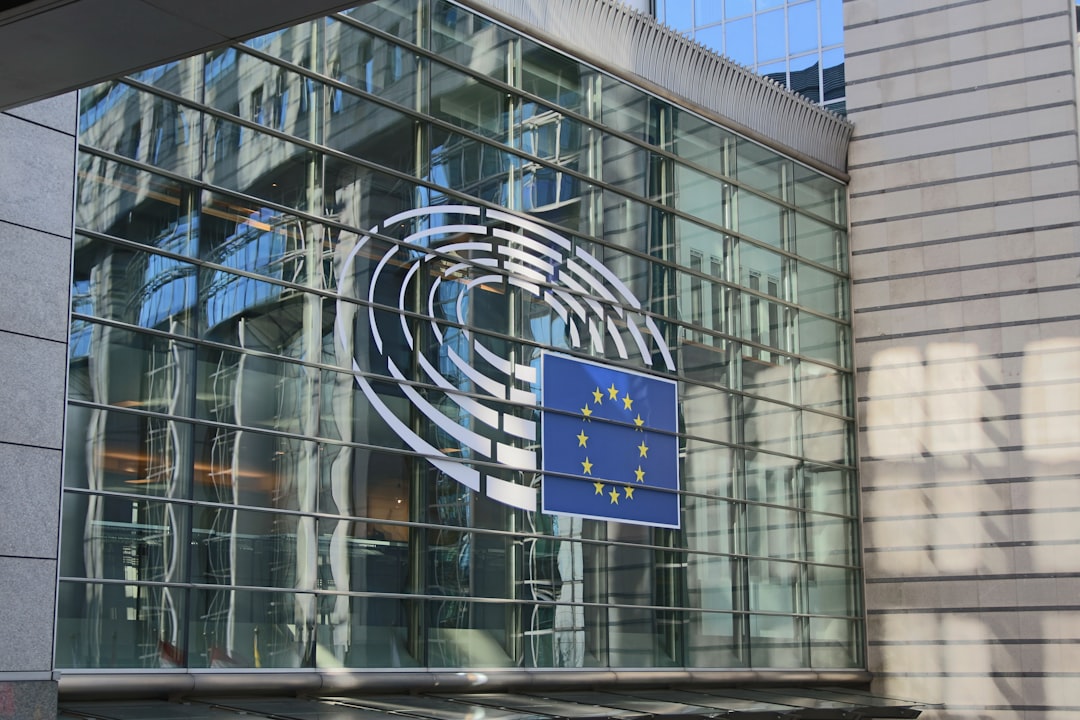
The European Union demonstrated regulatory muscle this month, targeting digital giants with a series of procedures and significant fines, while laying the groundwork for a new defense doctrine. The Commission launched infringement actions against TikTok and Temu and imposed a €890 million fine on Google, asserting concrete application of new legislation on digital services and markets. On the strategic front, the announcement of nuclear cooperation between France and Germany marks a major shift, paving the way for potential European defense autonomy.
This period was also marked by a new migration crisis in Ceuta, testing solidarity between member states and the management of the EU's external borders. In parallel, contradictory signals are emerging on the Green Deal front, with a loosening of carbon market rules that raises questions about the Union's climate ambition. Finally, sharp analyses highlight the persistence of the EU's geopolitical impotence on major international issues, despite record internal support from public opinion for European membership.
The Commission asserts its regulatory power over digital
This month, the European Commission multiplied actions to enforce its new legislation on digital markets and services, signaling the end of an era of tolerance towards large technology platforms.
On July 22, the European executive imposed a €890 million fine on Google for non-compliance with its obligations under the Digital Markets Act (DMA) (European Commission, 22/07). This financial penalty is one of the first of such magnitude under the new regulation. The next day, the Commission announced the opening of formal proceedings against TikTok, suspecting a violation of the Digital Services Act (DSA) for failing to ensure the security of minors' accounts (European Commission, 23/07). This action follows a Commission proposal, led by President Ursula von der Leyen, aimed at imposing a 13-year-old age restriction for access to social networks across the EU (Politico EU, 13/07).
In the same vein, the Commission issued a statement of objections to the e-commerce platform Temu for potential obstruction during an inspection conducted under the Foreign Subsidies Regulation (FSR) (European Interest, 02/08). A record fine was also imposed on AliExpress for products deemed dangerous and counterfeits (European Interest, 21/07).
To accompany this tightening, the EU launched a new task force dedicated to combating deepfakes, illegal content and piracy related to artificial intelligence (AI) (European Interest, 02/08). The Commission also published, on July 20, guidelines on transparency obligations for suppliers and users of certain AI systems, further expanding its regulatory arsenal (European Commission, 19/07). Finally, to support its technological sovereignty, the EU announced funding for seven AI "gigafactories" to catch up with the United States and China (European Interest, 01/08).
Franco-German nuclear cooperation: a first step toward autonomous European defense?
A major strategic shift was announced on July 19 with the initiation of nuclear cooperation between France and Germany. According to European Interest, the Bundeswehr will participate in a nuclear exercise led by France before the end of the year (European Interest, 19/07). This initiative, which will initially see Germany provide support with conventional means, represents a departure from Berlin's previous policy.
President Emmanuel Macron stated that Germany would play a "NATO guardian role" in this collaboration. This approach aims explicitly to strengthen Europe's security independence as a complement to the existing nuclear-sharing agreement within the North Atlantic Treaty Organization (NATO). This announcement comes as influential think tanks alert to the EU's inability to position itself on the world stage.
The migration crisis in Ceuta, a new test for European solidarity
In early August, heavy migration pressure on the Spanish enclave of Ceuta again placed the question of border management and European solidarity at the center of the agenda. Spanish authorities accused Morocco of being the source of this crisis (Politico EU, 03/08).
Facing this situation, EU ministers are expected to express support for Spain, but the crisis highlights the flaws in European solidarity. An analysis by the European Council on Foreign Relations (ECFR) underscores the failure of European solidarity in the face of this crisis, recalling persistent tensions between member states over the distribution of responsibilities (ECFR, 31/07). The episode is a test for the new Pact on Migration and Asylum and its effective implementation.
Foreign Policy: between geopolitical impotence and internal divisions
Despite advances on defense, the period was marked by a scathing analysis of the Union's geopolitical impotence. According to the Jacques Delors Institute, the recent war waged by the United States and Israel against Iran and Lebanon highlighted the EU's "geopolitical insignificance", incapable of influencing the course of a conflict at its doorstep or protecting itself from its economic impact, described as the third major shock for Europe in less than a decade (Jacques Delors Institute, 15/07).
This impotence is compounded by persistent internal divisions. On the Israeli-Palestinian conflict, a growing group of member states is pushing the Commission to propose commercial restrictions on products from illegal Israeli settlements. However, President von der Leyen is accused of stalling on this politically and legally sensitive issue (Politico EU, 13/07). Furthermore, the EU is criticized for its approach deemed contradictory with Azerbaijan, praised for its energy supplies while the regime represses journalists (EU Observer, 24/07).
A trend signal comes from Germany, where an ECFR study shows that public opinion is increasingly favorable to a firmer policy toward China, which could influence Berlin's future position and, by extension, that of the EU (ECFR, 06/08).
Green Deal: adjustments that raise questions about climate ambition
The European Green Deal is undergoing adjustments that raise questions about maintaining its initial level of ambition. The European Commission has decided to ease carbon market (ETS) rules, allowing industries to pollute longer (Politico EU, 17/07). This decision is presented as a pragmatic measure to preserve competitiveness, but it is perceived by NGOs as a step backward.
In parallel, new studies on the presence of microplastics in children's bodies and cancerous tissues are raising concerns and calling for stronger European legislation, deemed too weak in this area (EU Observer, 22/07). These developments illustrate the permanent tension between environmental objectives, economic imperatives and public health concerns.
To watch
- Procedures against digital giants: The next steps of formal investigations against TikTok and Temu should be closely monitored, as well as any potential legal challenges by Google to its fine.
- Crisis in Ceuta: The EU's political and operational response to the situation at the Spanish border, as well as diplomatic discussions with Morocco, will determine the Union's ability to manage its external borders in solidarity.
- Franco-German nuclear cooperation: The implementation of the joint military exercise by the end of the year and the doctrinal discussions that follow will be a key indicator of progress toward European strategic autonomy.
Photo: Guillaume Périgois / Unsplash
Get the European Policy briefing by email
Monthly intelligence on european policy, curated with AI and reviewed by senior analysts. Available in English, French and Italian.
Subscribe for free