Global energy news is dominated by a major warning from the International Energy Agency (IEA), which has sharply revised its oil-deficit projections for 2026 upward. The ongoing conflict in Iran and the prolonged closure of the Strait of Hormuz are producing the most severe supply disruption in history, threatening global energy security and economic stability. This fossil-fuel crisis is draining stocks at an alarming pace and spilling over into other sectors, jeopardizing access to clean cooking in Africa and Europe's gas security.
As a counterpoint to this crisis, North America is displaying signs of an accelerating transition. Canada has unveiled a historic investment project in hydropower and wind, while in the United States the renewables sector is demonstrating growing political influence. However, these advances are tempered by stark warnings: the IEA deems the 2030 green-hydrogen targets out of reach, and Canada's fossil-fuel industry is booking record profits off the back of the geopolitical crisis, underscoring the contradictory dynamics driving the global energy transition.
The IEA Warns of a Record Oil Deficit as the Iranian Conflict Persists
The period has been marked by a dramatic worsening of the supply crisis on the global oil market. In its August monthly report, the International Energy Agency (IEA) issued a fresh warning, now anticipating a gap between global supply and demand of 1.27 million barrels per day (bpd) in 2026. This forecast represents a considerable deterioration from the previous month's estimate, which had projected a deficit of 860,000 bpd (news.cgtn.com, 12/08).
The principal driver of this extreme strain is the persistence of the conflict in Iran, described as the largest supply disruption in history (Crypto Briefing, 20/08), and the lack of any prospect of the Strait of Hormuz reopening. The direct consequence of this situation is to double the rate at which global oil stocks are being depleted, threatening global energy security (saba.ye, 12/08). The IEA warned on 12 August that the market faced its largest supply deficit in five years, draining inventories at an accelerated pace and heightening the risk of a renewed price surge (gCaptain, 12/08; 富途牛牛, 12/08). The demand destruction induced by high prices is no longer sufficient to offset the supply shortfall, further deepening the contraction of the global economy (CNBC, 12/08).
Beyond Oil: Hydrogen, Clean Cooking and Gas Markets Under Strain
The effects of the current geopolitical crisis are spreading well beyond the crude oil market alone, affecting several pillars of the energy transition and of supply security.
On the hydrogen front, the IEA issued a stark warning on 30 July, judging that the 2030 green-hydrogen production targets are now "out of reach". This potential failure to build out the sector threatens to delay the decarbonization of heavy industry and transport, two sectors that are key to meeting global climate targets (Table.Briefings, 30/07).
In Africa, the crisis is having a direct and worrying impact on just-transition goals. On 19 August the IEA warned of an "LPG crisis" that threatens the progress made on clean cooking across the continent. The rise in prices for liquefied petroleum gas (LPG), an essential transition fuel for millions of households, risks forcing a return to the use of traditional biomass (wood, charcoal), with adverse health and environmental consequences (Punch Newspapers, 19/08).
In Europe, supply security for the coming winter is also a source of concern. An analysis published on 7 August underscores that Germany's "gamble" on its gas supplies could jeopardize the energy stability of the entire continent during the heating season (Politico EU, 07/08).
North America Facing Diverging Energy Trajectories
While the world is gripped by a fossil-fuel crisis, contrasting developments are emerging in North America, illustrating both an accelerating transition in certain areas and the economic resilience of the oil sector.
In Canada, an agreement in principle billed as the "largest clean-energy investment in North America" was announced on 18 August between the governments of Quebec, Newfoundland and Labrador, and the federal government. The project envisages the development of massive renewable capacity, including up to 14,000 megawatts (MW) of hydropower and 2,000 MW of wind (theenergymix.com, 18/08). This momentum is buttressed by strategic thinking: experts argue that the trade war waged by the Trump administration could act as a catalyst to accelerate Canada's energy transition and reinforce its economic sovereignty (theenergymix.com, 25/08). With this in mind, the Canadian Climate Institute has proposed the creation of a federal fund to finance the expansion of electricity grids without passing the cost on to current consumers (theenergymix.com, 23/07).
At the same time, the global crisis is delivering a windfall to Canada's oil sector. The four largest oil-sands companies posted combined profits of $13.3 billion for the single quarter ended 30 June 2026, capitalizing directly on the war in the Middle East (theenergymix.com, 11/08).
In the United States, political signals point to the growing influence of the renewables sector. On 13 August it was reported that several incumbent Republican lawmakers known for their anti-renewables stances were defeated in the Congressional primaries, illustrating a new political dynamic. One report suggests that the high energy costs tied to Donald Trump's agenda could weigh on Republicans in the midterm elections (theenergymix.com, 13/08).
Transport Electrification and Pre-COP31 Controversies
Two important signals have emerged concerning the future of transport and global climate governance.
First, a Carbon Tracker report published on 27 August indicates that the heavy-truck market is on track to electrify faster than expected. The analysis anticipates a commercial tipping point in the early 2030s, when the total cost of ownership of electric trucks will fall below that of diesel trucks. China, thanks to falling battery costs and economies of scale, is positioned to become a major exporter of this technology, potentially accelerating the transition on a global scale (carbontracker.org, 27/08).
Second, preparations for COP31, scheduled to be held in Antalya (Turkey), are already stirring controversy. Media reported on 18 August that fertile farmland was being paved over to create car parks ahead of the climate summit. This development raises questions about the consistency and exemplary conduct of the host countries of the United Nations climate negotiations (Bianet, 18/08).
What to Watch
- The IEA's next monthly oil-market report (mid-September 2026): The new estimates on the supply deficit and the state of global stocks will be keenly awaited.
- Finalization of the energy-investment agreement in Canada: The realization of the provisional deal between Canada, Quebec, and Newfoundland and Labrador to develop 16 GW of clean energy.
- US midterm elections (in roughly 82 days, i.e. mid-November 2026): The influence of energy themes on the electoral results, as the renewables sector shows growing political weight.
- Preparations for COP31: Monitoring the controversies surrounding the organization of the summit in Antalya, which could affect the credibility of the UNFCCC process.
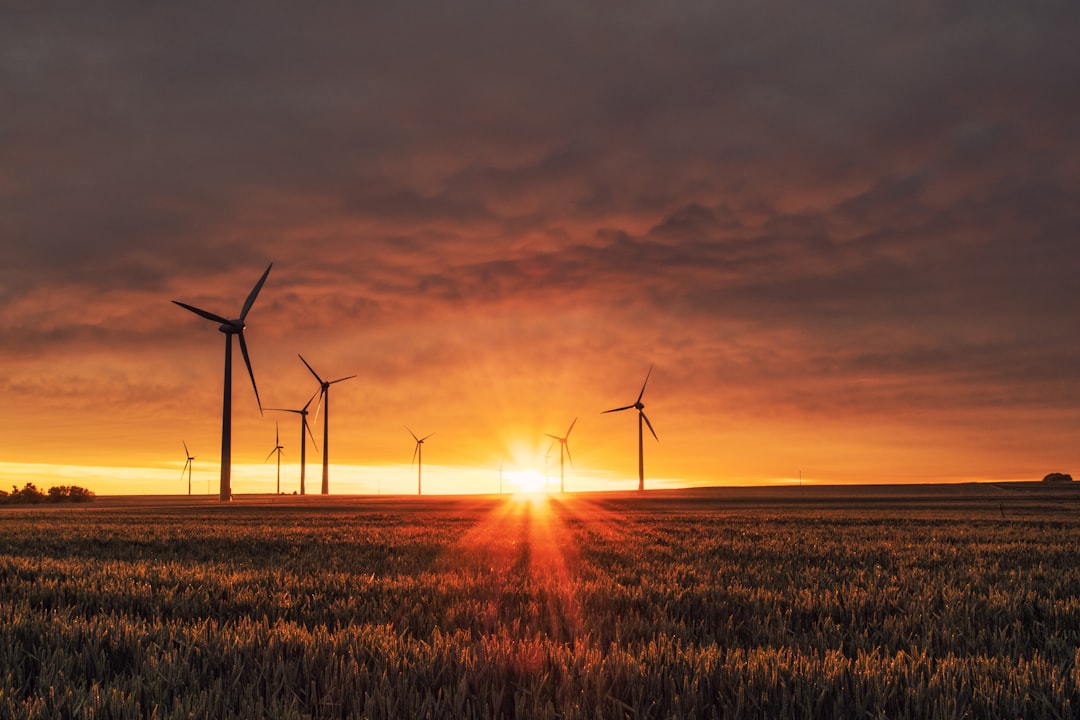
Photo: Karsten Würth / Unsplash
Get the Energy & Climate briefing by email
Monthly intelligence on energy & climate, curated with AI and reviewed by senior analysts. Available in English, French and Italian.
Subscribe for free