The period under review reveals a growing rift between the rapid deterioration of food crises and the deployment of long-term financing strategies. The World Food Programme (WFP) is on the front line, warning of a critical worsening of the situation in Afghanistan, Sudan and the Palestinian Territories, marked by rising child malnutrition and direct attacks on its convoys. This humanitarian emergency highlights the fragility of supply chains and the inadequacy of emergency funding.
By contrast, the International Fund for Agricultural Development (IFAD) is accelerating the rollout of innovative financial mechanisms, notably in East Africa with the launch of funds worth several hundred million dollars for climate adaptation and support to agribusiness. These strategic initiatives, also visible in India, nonetheless coexist with critical governance risks, as illustrated by a large-scale corruption scandal in Kenya involving an IFAD-financed project. The organisation's replenishment process (IFAD14) will therefore be a major milestone to watch.
The WFP on the Front Line Amid a Proliferation of Acute Food Crises
The World Food Programme (WFP) has documented an alarming deterioration in food security on several fronts during the period. Afghanistan concentrates the most severe warnings: the agency cautioned against a rise in child mortality driven by the worsening hunger crisis (KabulNow, 20/08). According to one of its statements, 86% of malnourished women and children in the country reportedly lack access to the treatment they need (Amu TV, 18/08), a situation exacerbated by cuts in international aid that are forcing clinics to turn families away (The Mighty 790 KFGO, 04/08). The WFP has had to deploy emergency assistance for those displaced by the border conflict with Pakistan (thekabultribune.com, 18/08).
The situation is equally critical in the Palestinian Territories. A WFP report points to rising hunger in the West Bank (WFP, 07/09), while in Gaza nearly half of households report going to bed on an empty stomach (Roya News, 28/08). The agency's quarterly report for the first quarter of 2026, published in July, already confirmed this trend (ReliefWeb, 13/08).
In Sudan, the humanitarian crisis is compounded by direct attacks on aid. An airstrike in South Kordofan destroyed WFP food aid intended for 5,800 people (A News, 02/09; Oz Arab Media, 02/09). At the same time, the WFP and the United Nations High Commissioner for Refugees (UNHCR) warned that refugees in South Sudan face extreme hunger owing to depleted funding (World Food Program USA, 17/08). Similar alerts concern Myanmar, where the WFP launched an emergency response to flooding (fundsforNGOs News, 14/08), and Syria, where hunger is also worsening following aid cuts (Arab News, 24/08). These multiple crises underscore the relevance of the WFP's analyses on the impact of disruptions to major trade routes on global food security (UN World Food Programme, 08/09).
IFAD Multiplies Financing Instruments for Agricultural Resilience
In response to structural challenges, the International Fund for Agricultural Development (IFAD) has intensified its financial-partnership strategy, particularly in Africa and Asia. The strongest signal is the launch of a $200 million climate adaptation fund in partnership with the Equity Group, aimed at farmers in East Africa (Africa Business Communities, 04/09; KT Press, 04/09). In the same region, IFAD also launched a further $200 million blended-finance facility (streamlinefeed.co.ke, 03/09). This blended-capital mobilisation strategy is confirmed by the signing of a $10 million loan agreement with AgDevCo to support the next generation of agrifood enterprises on the continent (ifad.org, 03/09).
This approach is also playing out at national level, as in Nigeria, where the IFAD-VCDP programme distributed agricultural equipment and supported people with disabilities in Kogi State (MSME Africa, 18/08).
The momentum is not confined to Africa. IFAD and India launched a new eight-year partnership strategy aimed at strengthening the country's rural economy, a major commitment with one of the world's largest agricultural players (DD News, 03/09). These developments come as IFAD is actively preparing its next financing cycle, with the publication of a draft report for the 14th replenishment of its resources (IFAD14) (IFAD, 02/09).
A Corruption Scandal in Kenya Exposes Governance Risks
The positive momentum of IFAD's financing is nonetheless tarnished by a large-scale fraud affair in Kenya. The country's Ethics and Anti-Corruption Commission (EACC) arrested nine people, including Treasury officials and contractors, in connection with the alleged embezzlement of 1.57 billion Kenyan shillings (KES) on an IFAD-financed project (streamlinefeed.co.ke, 18/08; The Kenyan Wallstreet, 19/08).
This scandal highlights the governance and corruption risks inherent in international development projects, even when they are led by leading multilateral institutions. It represents a major reputational risk for IFAD and could shape discussions on control and disbursement mechanisms within the IFAD14 replenishment framework. The case is being closely monitored, as evidenced by the meeting between Kenya's Principal Secretary at the National Treasury and IFAD's new Country Director shortly after the arrests (Dawan Africa, 07/09).
Partnerships and Diplomacy: the EU and the Rome-Based Agencies Strengthen Their Collaborations
Beyond the crises and the major financial mechanisms, the period was marked by sustained diplomatic and partnership activity. The European Union (EU) reaffirmed its role as an agricultural-development actor, notably through the launch of a €14 million programme in Uganda, in partnership with the WFP and the German Agency for International Cooperation (GIZ), to strengthen livelihoods (fundsforNGOs News, 12/08). The European External Action Service (EEAS) also communicated on its work supporting the resilience of Afghan communities (EEAS, 31/08).
Logistical and operational partnerships are also continuing. DP World and the WFP collaborated to deliver 5,000 tonnes of rice to Burundi, the Democratic Republic of the Congo and Rwanda, demonstrating the importance of private-sector actors in the humanitarian-aid chain (The Tanzania Times, 19/08). On the diplomatic front, discussions took place between Syria and the WFP on agricultural development and the establishment of an insurance system (SANA, 18/08), while the Kyrgyz Republic formally presented the credentials of its new Permanent Representative to the WFP (EGOV.KG, 04/09). Finally, a broader signal was sent by a grouping of global lenders that pledged to strengthen fertiliser supply chains in order to safeguard food security (Manila Bulletin, 01/09).
To Watch
- IFAD14 replenishment process: The publication of the draft report launches a crucial consultation phase for the future budget of the International Fund for Agricultural Development. Member-state contributions and governance safeguards, particularly in light of the Kenyan affair, will be decisive.
- Fertiliser initiative: The commitment by "global lenders" to secure fertiliser supply chains warrants close monitoring to identify the concrete actors, the amounts pledged and the implementation timeline.
- Financing of WFP emergency operations: The WFP's repeated warnings about depleted funds for major crises (South Sudan, Afghanistan) raise the question of the sustainability of humanitarian aid. Upcoming donor contribution announcements will be critical.
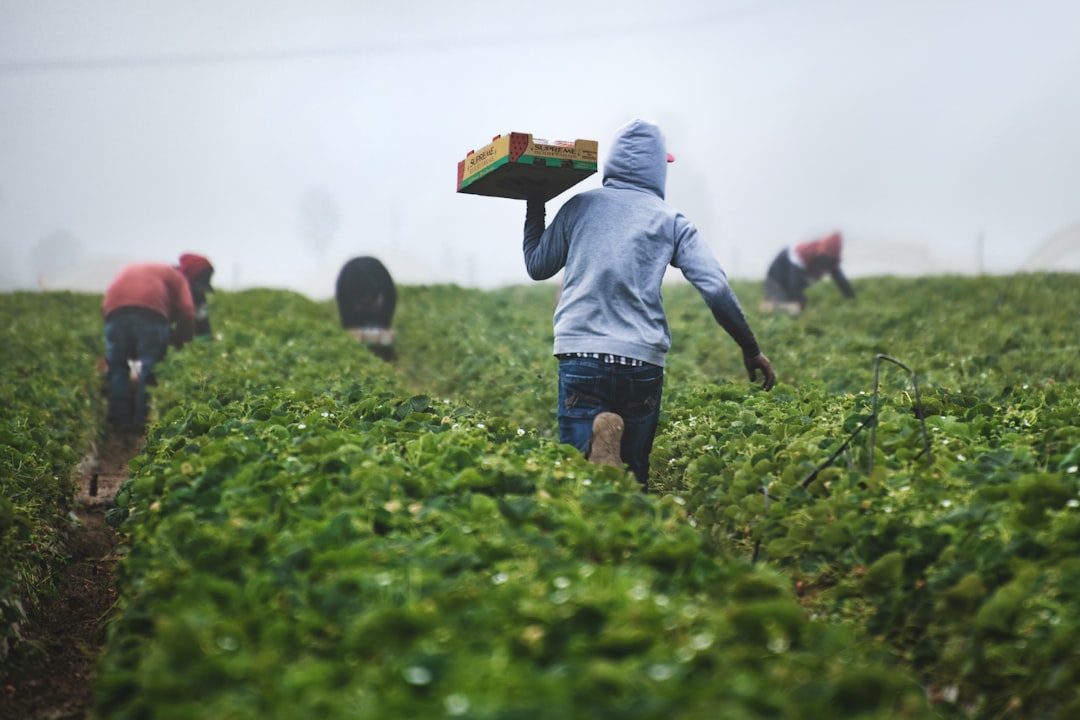
Photo: Tim Mossholder / Unsplash
Get the Agrifood briefing by email
Monthly intelligence on agrifood, curated with AI and reviewed by senior analysts. Available in English, French and Italian.
Subscribe for free