The period is marked by an intensification of food crises, with a record level of hunger in Northern Nigeria and the major economic impact of the closure of the Strait of Hormuz, which blocks nearly 1,200 vessels. In response, Rome-based agencies and their partners are stepping up their action. The World Food Programme (WFP) has notably renewed a crucial partnership in Pakistan to protect 3.3 million women and children from malnutrition. Meanwhile, the International Fund for Agricultural Development (IFAD) is pursuing its partnership strategy in Africa, with notable initiatives in Ghana and recognition of its work in Liberia. On the technical front, a new collaboration between FAO and the IAEA has been launched to combat an animal epidemic in the Americas. Finally, the European Union is making a strategic adjustment to its livestock policy, giving it a new geopolitical scope.
Multiple food crises: WFP on the front lines facing famines and logistics blockages
This month, food security alerts materialized into acute crises on the ground, confirming warnings issued by UN agencies over recent months (context – 06/2026).
The most alarming signal comes from Nigeria, where the World Food Programme (WFP) reported on July 2 that hunger in the country's north has reached its worst levels in nearly a decade (WFP — News via U.S. News & World Report, 02/07/2026). This critical situation illustrates the rapid deterioration of food security in regions already weakened by conflict and climate change.
These humanitarian crises are exacerbated by major logistics shocks. The closure of the Strait of Hormuz, a strategic passage point for global trade, has direct and massive consequences. According to the Financial Times, approximately 1,200 cargo vessels, carrying an estimated value of $125 billion in goods, are stranded (Financial Times, 23/06/2026). This disruption, directly linked to geopolitical tensions in the Middle East, is severely disrupting global supply chains, including those for food and agricultural inputs, posing a systemic risk to market stability.
Faced with these emergencies, the WFP continues its humanitarian diplomacy. In Gaza, the agency partnered with Ambassador Martin Selmayr of the European External Action Service (EEAS) to inaugurate a traveling exhibition aimed at raising awareness of the humanitarian situation (WFP — News via EEAS, 23/06/2026). This communication action underscores the severity of the crisis and the need to mobilize the international community.
Development diplomacy: IFAD and WFP expand South-South and public-private partnerships
Parallel to crisis management, agricultural development agencies are intensifying their collaborations to strengthen long-term resilience of food systems. The International Fund for Agricultural Development (IFAD) and the WFP stand out through a series of strategic agreements.
In Africa, IFAD is strengthening its footprint. At a regional forum in Côte d'Ivoire, Ghana's Minister of Agriculture publicly praised IFAD's partnership and highlighted a free fertilizer subsidy program, underscoring the importance of these collaborations for local production (The Business & Financial Times, 24/06/2026). Similarly, the Liberian government officially commended IFAD's country representative, Pascaline Barankeba, for her role in strengthening agricultural cooperation and investment flows (MSN, 03/07/2026).
In Asia, a major initiative was concluded in Pakistan. The Benazir Income Support Programme (BISP), the WFP, the World Health Organization (WHO), and the United Nations Children's Fund (UNICEF) have extended their partnership. This agreement aims to protect 3.3 million children and women from malnutrition, illustrating an integrated and large-scale approach combining social protection, health, and nutrition (emro.who.int, 09/07/2026).
At the multilateral level, a commitment to strengthen cooperation was made between leaders of the WFP, the International Organization for Migration (IOM), and the Public-Private Partnership (PPP), an inter-governmental alliance focused on South-South cooperation (Bangladesh Sangbad Sangstha, 18/06/2026). This convergence reflects a trend toward breaking down silos between mandates to address root causes of food insecurity, particularly migration and development financing. A weak but notable signal is The New Humanitarian's mention of discussions linking the WFP, technology company Palantir, and the Pope, suggesting an exploration of new frontiers for humanitarian aid, between data technology and ethical principles (The New Humanitarian, 25/06/2026).
Global governance: technical cooperation and Water-Climate nexus
Substantive work on policy frameworks and technical cooperation continues within multilateral bodies.
The Committee on World Food Security (CFS) has maintained pressure on structural issues. At a side event at the Global Forum for Food and Agriculture (GFFA), the CFS presented its recommendations on the links between water, climate, food security, and nutrition (Food and Agriculture Organization, 12/06/2026). This session continues the CFS's efforts to fully integrate water and climate constraints into global food governance.
On the animal health front, a transboundary threat triggered a coordinated response. The Food and Agriculture Organization of the United Nations (FAO) and the International Atomic Energy Agency (IAEA) launched a joint project to combat a resurgence of New World Screwworm (FAO — News, 19/06/2026). This initiative targets Central America, Mexico, and the United States, demonstrating continental-scale technical cooperation to counter an epidemic that seriously threatens livestock and wildlife, and by extension the economic security of ranchers.
Trade policy: the EU confers a geopolitical dimension to its beef sector
In a context of increasing global tensions, the European Union is adjusting its agricultural policy instruments to integrate strategic considerations. According to Politico EU, European beef farming is undergoing a "geopolitical upgrade" (Politico EU, 07/07/2026). This evolution signals a recognition that agricultural production, beyond its food-producing function, is a lever of influence and an issue of sovereignty. Although the details of this strategy are not fully disclosed, this shift suggests that future support policies, environmental standards, and trade agreements related to the beef sector will increasingly be evaluated in light of their geopolitical implications. For major producing and exporting countries such as Brazil, Argentina, the United States, and Australia, this change could translate into new conditions on European markets or modified competition through public support reoriented within the EU.
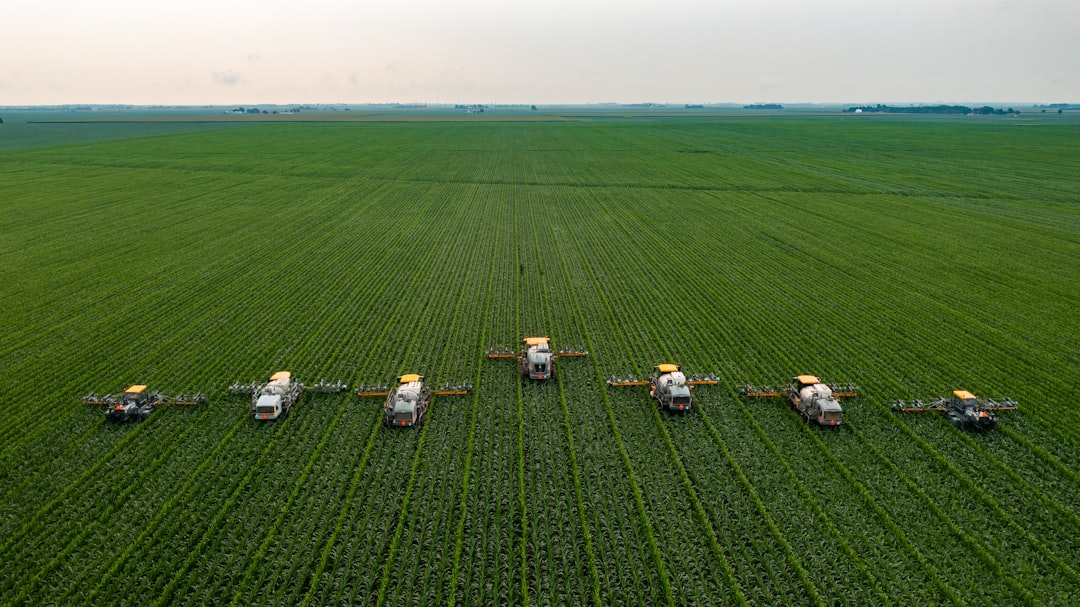
Photo: James Baltz / Unsplash
Get the Agrifood briefing by email
Monthly intelligence on agrifood, curated with AI and reviewed by senior analysts. Available in English, French and Italian.
Subscribe for free