The period is marked by a cascade of humanitarian alerts issued by the World Food Programme (WFP), which signals a rapid deterioration of food security on multiple fronts. The El Niño phenomenon alone could push 49 million additional people into acute hunger, while WFP operations are threatened by "donor fatigue," leading to drastic or imminent aid reductions in Gaza, Jordan, Burundi, and Afghanistan. The crisis is also intensifying in Sudan, where El Obeid has become the new epicenter of hunger.
Facing this critical situation, development actors are maintaining a long-term approach. The International Fund for Agricultural Development (IFAD) has multiplied structural partnerships, notably in Nigeria, which becomes the first African country to transpose the Kampala Declaration, but also in South Sudan and Central Asia. On the governance front, the CGIAR research consortium has appointed former Ethiopian Prime Minister Hailemariam Dessalegn to head its board of directors, a strong signal for anchoring agronomic research on the African continent. Finally, tensions on global supply chains persist, illustrated by the risk of a fertilizer crisis in Bangladesh linked to the closure of the Strait of Hormuz.
The WFP Sounds the Alarm on a Series of Global Food Crises
The period has been dominated by a series of serious warnings from the World Food Programme (WFP), illustrating mounting and simultaneous pressure on multiple crisis zones.
Globally, the UN agency warned on August 5 about the impact of the strengthening climate phenomenon El Niño, which could plunge 49 million additional people into a situation of acute hunger by 2027 (UN News, 05/08). This macro-climatic projection is accompanied by a new institutional strategy: the WFP has published its anticipatory action framework for 2026-2029, explicitly aiming to transform weather forecasts into preventive actions to prevent climate shocks from becoming humanitarian disasters (ReliefWeb, 20/07).
This outlook is darkened by "donor fatigue" that is severely constraining field operations. * In Gaza, despite fragile improvements due to increased aid, the child malnutrition crisis persists (FAO, 23/07). The WFP has warned repeatedly, on July 24, that deeper cuts in aid would be inevitable without urgent funding (Reuters, 24/07). * In Jordan, 83,000 Syrian refugees are already receiving reduced food assistance due to financial constraints (jordannews.jo, 26/07). * In Burundi, food aid destined for 130,000 refugees risks being completely interrupted due to lack of new funds (FSX Business, 25/07). * In Afghanistan, where child mortality is rising, food distributions are also facing cuts (The Washington Post, 04/08).
Several crisis hotspots are worsening. The WFP designated mid-July the city of El Obeid as the new epicenter of the hunger crisis in Sudan (Horn Observer, 18/07; Dabanga Radio TV Online, 20/07). In parallel, bilateral contributions are attempting to fill the gaps: the United States has provided 24 million dollars for assistance to Sudanese refugees in Egypt (DNE Africa, 16/07) and Japan has signed an agreement for 1.9 million dollars for food security in Yemen (Yemen Online, 17/07).
IFAD Multiplies Structural Partnerships in Africa and Asia
As a counterpoint to short-term alerts, the International Fund for Agricultural Development (IFAD) is pursuing its long-term investment strategy, focused on partnerships with Southern governments. The agency's 2025 annual report, published in July, emphasizes that its investments have reached 92 million people and reaffirms that support for smallholder farmers "at the first kilometer" is a driver of food security and global stability (Devdiscourse, 16/07; Farmers Review Africa, 16/07).
This strategy has materialized through several major initiatives during the period: * In Nigeria, IFAD has welcomed a major political advance: the country became in July the first in Africa to integrate the Kampala Declaration of the Comprehensive Africa Agriculture Development Programme (CAADP) into its national law, a key step in strengthening its agrifood sector (Apex News Exclusive, 23/07). In parallel, IFAD and the Nigerian government launched the CSAPR project (Climate-Smart Agrifood Project) and directly supported 1,918 farmers in Nasarawa State (EnviroNews Nigeria, 26/07; Arise News, 15/07). * In South Sudan, the agency launched a food security program with the government of 41.8 million dollars targeting four counties (Radio Tamazuj, 22/07). * In Afghanistan, a new initiative of 3.64 million dollars was launched to strengthen rural livelihoods and climate resilience (ifad.org, 17/07). * In Uzbekistan, IFAD and the government have agreed to accelerate the deployment of new agricultural projects to strengthen rural development (UzDaily.uz, 22/07).
Governance and Diplomacy: Key Appointments and Geopolitical Tensions
On the front of global governance, CGIAR, the global consortium for agronomic research, has appointed former Ethiopian Prime Minister Hailemariam Dessalegn Boshe as the first president of its board of directors (EthiopiaToday, 31/07). This appointment of a leading African political figure signals a desire to anchor the CGIAR's strategy more firmly in the political and development realities of the continent.
Geopolitical tensions continue to directly affect agricultural supply chains. The closure of the Strait of Hormuz (context — 06/2026) has raised fears at the WFP of a fertilizer crisis in Bangladesh, a country heavily dependent on imports (Jagonews24.com, 23/07). This situation threatens agricultural production and food security for nearly 18.1 million people deemed vulnerable in the country (Views Bangladesh, 23/07). A signal of easing appeared on August 4, with the announcement of an imminent agreement for the reopening of the Strait, which immediately caused oil prices to fall (Financial Times, 04/08). The implementation of this agreement will be a determining factor for the stability of agricultural input markets in the coming months.
European Pesticide Regulation, a Global Trade Issue
An analysis by Politico EU on August 12 highlights the potential international repercussions of European Union regulation on pesticides. According to the media, the EU's plans to reduce pesticide use could lead to a significant increase in production costs for commodities such as coffee, cocoa, or oranges, which are widely imported.
This situation creates a dilemma for the EU's trading partners, particularly Mercosur countries, which could see access to the European market become more complex. The analysis suggests that these measures, although motivated by internal environmental and health objectives (legacy of the "Farm to Fork" strategy), could be perceived as non-tariff barriers to trade and potentially challenged before the World Trade Organization (WTO). This issue illustrates the growing tension between the regulatory ambitions of the European "Green Deal" and the rules of multilateral trade, with direct implications for agricultural producers in Southern countries.
To Watch
The coming period will be marked by several dynamics to follow closely, although no precise calendar deadlines emerge from the corpus: * The evolution of the humanitarian situation in Gaza, Sudan, and Burundi, where WFP operations depend on obtaining emergency funding. * The implementation and modalities of the reopening of the Strait of Hormuz, which determines the stabilization of fertilizer and energy prices. * The first strategic directions that will be driven by the new president of the CGIAR board of directors, H.E. Hailemariam Dessalegn. * The implementation of new IFAD programs in Nigeria and South Sudan, and their impact on local agricultural resilience.
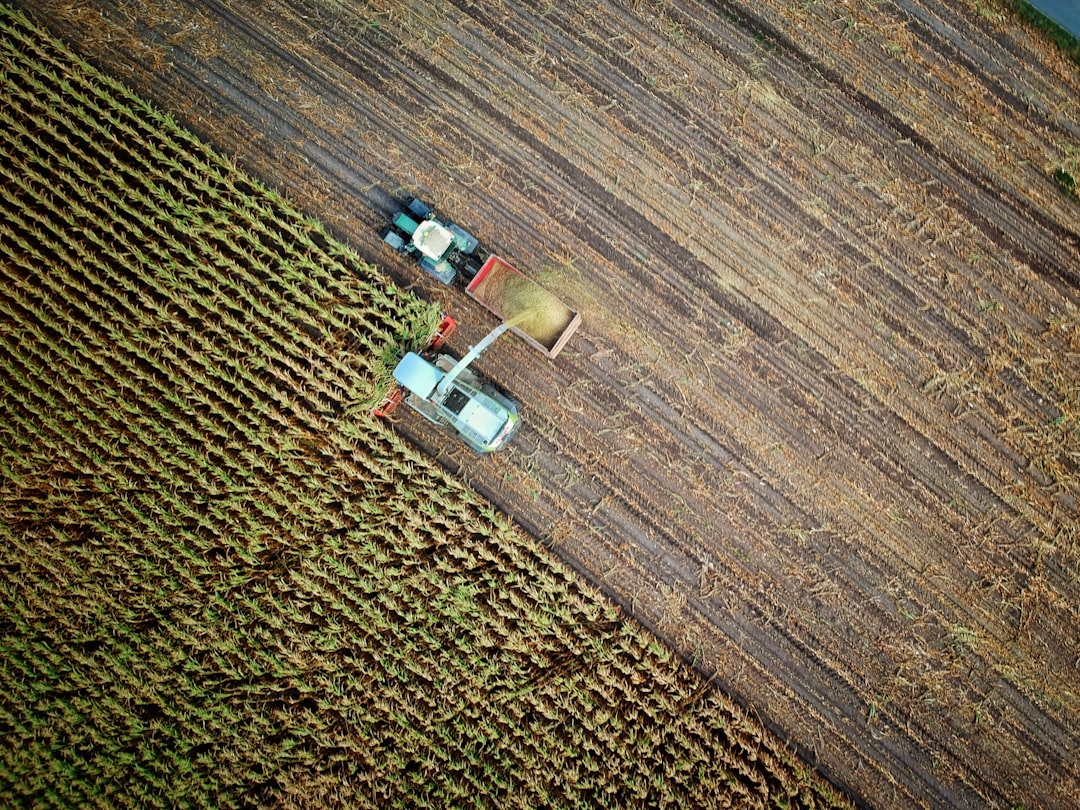
Photo: no one cares / Unsplash
Get the Agrifood briefing by email
Monthly intelligence on agrifood, curated with AI and reviewed by senior analysts. Available in English, French and Italian.
Subscribe for free